
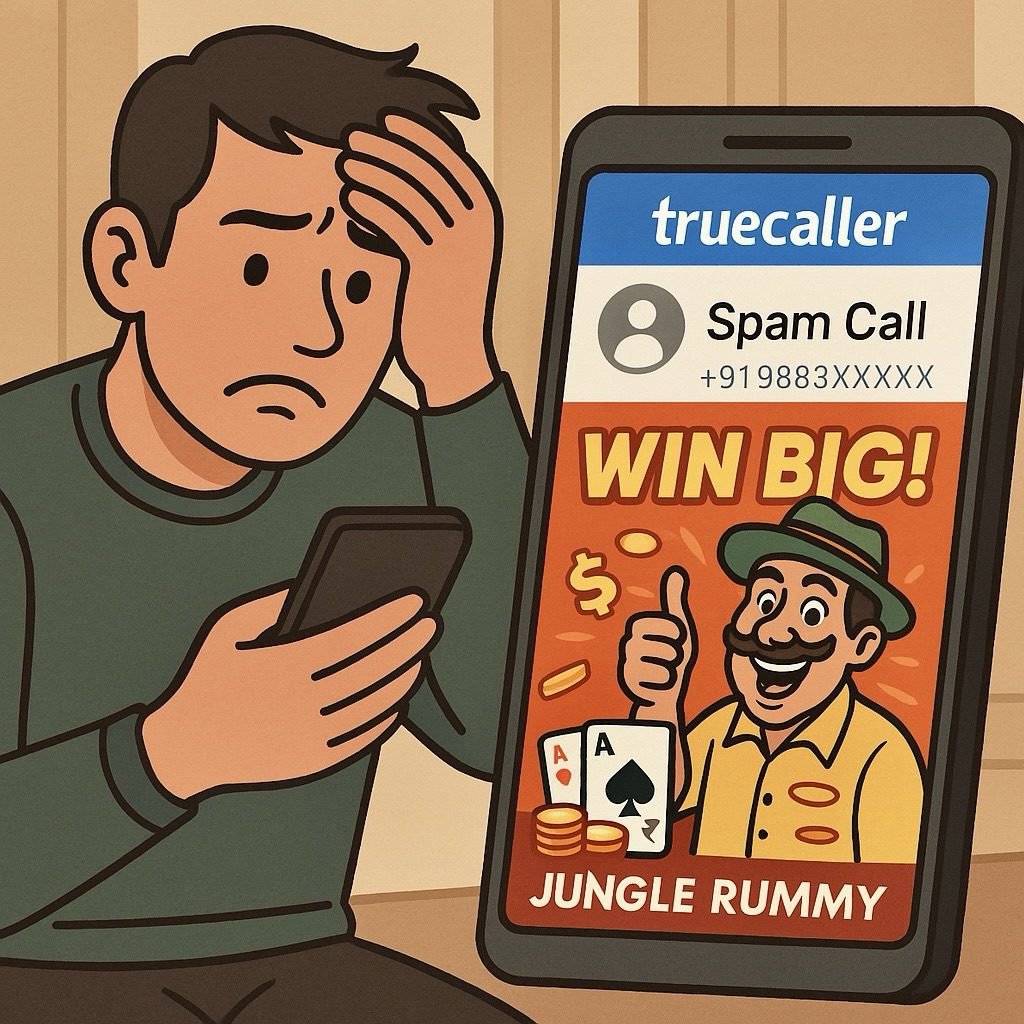
Ever opened Truecaller to check a number, and boom, there it is again?
Another Jungle Rummy ad: Win Big!’, glitzy design, over-the-top excitement. You don’t even consciously see it anymore. It’s just… there like background noise you’ve trained your brain to ignore.
It’s almost impressive how invisible it’s become.
But let’s pause for a second: Why is it that these ads don’t work? Why, despite seeing them hundreds of times, do we never feel nudged to download or try them? The answer says a lot about how bad advertising happens even with a big budget.
Let’s break it down.
1. Ad Fatigue Is Real (And Painful)
When you show the same message, in the same format, in the same place, over and over it becomes static. That’s not just a theory; it’s called banner blindness. The human brain is great at tuning out unimportant info, especially if it’s repeated too often without adding value.
Jungle Rummy ads? They’ve become the elevator music of digital ads. Familiar, repetitive, and totally ignorable.
2. Wrong App, Wrong Time, Wrong Vibe
Let’s be honest: no one opens Truecaller thinking, “Hey, maybe I’ll gamble a little today.”
Truecaller is a utility app. We use it when we’re busy, focused, or trying to avoid spam calls. Throwing a flashy gambling ad in that context feels like trying to sell cotton candy in a dentist’s office. It’s not just irrelevant, it’s jarring.
If you want people to download a game, target them when they’re bored, relaxed, or looking for fun not when they’re identifying a missed call from an unknown number.
3. Creatively… Meh
There’s a sameness to these ADs:
Dramatic music 🎶 Shouting text:
Play now and win ₹50,000!
Stock footage of someone winning big 💸
It’s the kind of template you could swap out with 10 other game ads and no one would notice. If your creative doesn’t evolve, neither will your audience’s interest.
4. Trust Issues, Big Time
Let’s face it, real-money gaming still makes people uneasy. Especially when it’s advertised like a get-rich-quick scheme. Add in stories of addiction, unclear legal status, or fine print hidden behind big claims, and it’s no surprise most of us instinctively don’t click.
People don’t want just excitement—they want transparency and fairness. And these ads rarely lead with that.
5. They’re Just Not Talking to You
There’s no personalization here. Whether you’re 18 or 58, into gaming or not, the ads treat you the same way. That’s lazy targeting in an era where smart ads know your habits, interests, even your downtime schedule.
Jungle Rummy isn’t failing because people don’t like games. It’s failing because the campaign is shouting into the void instead of having a conversation with the right people.
So, What Could They Do Better?
If someone from their ad team ever reads this (hi, hello 👋), here’s a free strategy brainstorm:
Target better: Show up in gaming apps or entertainment spaces, not utility apps. Freshen it up: Use storytelling, humor, or real testimonials. Rotate creatives before they become wallpaper.
Time it right: Don’t interrupt tasks. Show up when people are open to play—like late evenings or weekends. Build trust: Ditch the gimmicks. Be clear about how the game works, highlight responsible play, and show that it’s fair. Less is more: Fewer, better ads > constant, forgettable ones.
Final Thought
We live in an age where attention is hard to earn, and even harder to keep. If your AD shows up a hundred times and no one remembers it, that’s not persistence. That’s just bad advertising.
So the next time a Jungle Rummy ad pops up on your screen, you’ll know: the problem isn’t you. It’s the strategy.