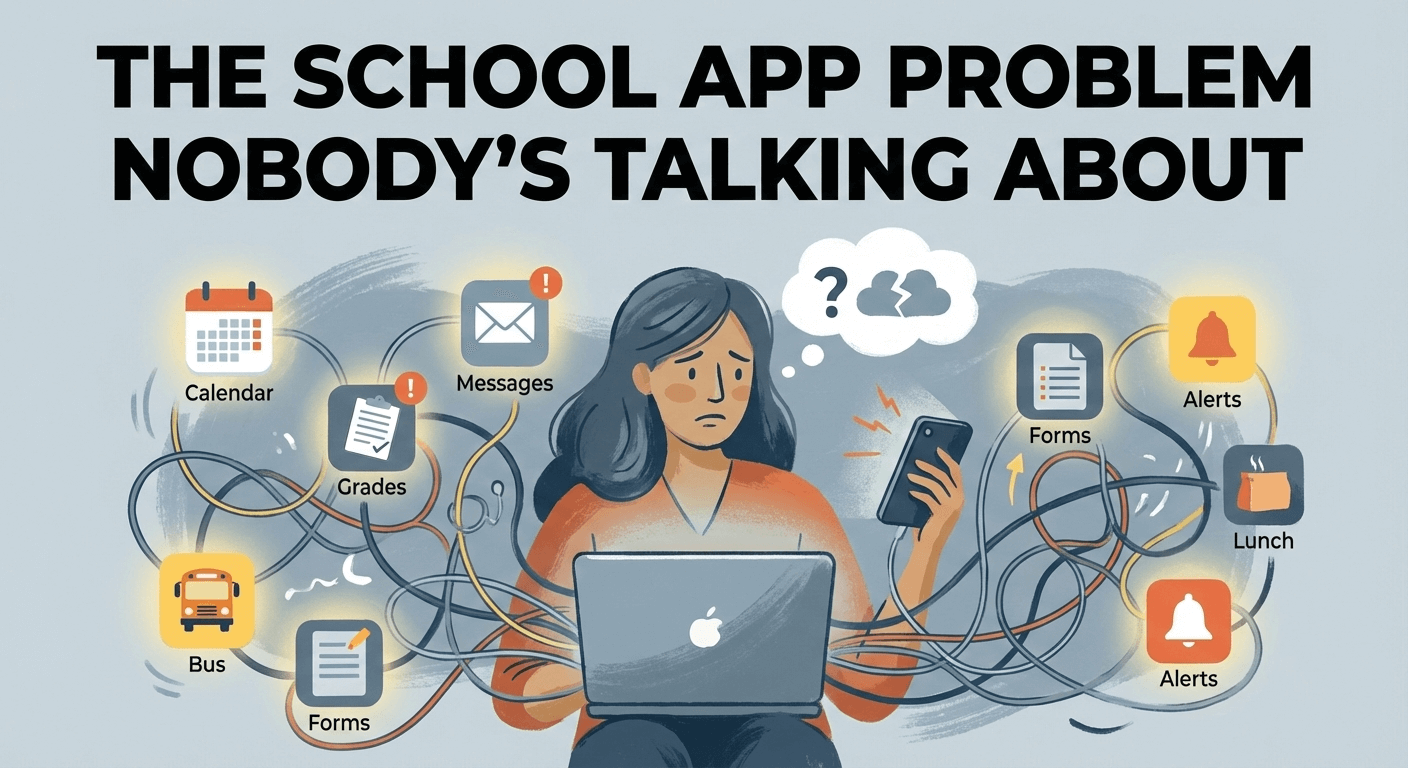
Schools across India are investing in management apps like SchoolElement and SchoolUnique, promising to streamline communication between parents, teachers, and administrators. But there’s a problem: nobody’s actually using them. Instead, crucial updates about homework, fees, and school events still arrive via WhatsApp and email. The exact chaos these apps were meant to solve.
The Technical Breakdown
The issue isn’t just poor design. It’s a perfect storm of version fragmentation that makes these apps fundamentally unstable for a large portion of parents.
Here’s what’s happening: App developers push regular updates to add features and fix bugs. But parents often run older phones with outdated operating systems either because they can’t afford newer devices or simply haven’t updated their OS. When the app updates but the phone doesn’t, crashes become inevitable.
Research shows that the Android ecosystem is particularly fragmented, with countless device models and OS versions making it impossible for developers to test every combination. While 89% of iOS users quickly adopt new versions, Android users remain scattered across multiple older versions. School management apps, typically developed by smaller EdTech companies with limited resources, can’t keep up with this testing burden the way massive consumer apps like WhatsApp can.
The numbers are damning: 56% of users uninstall apps within a week if they experience disruptions. Parents can’t uninstall the school app, but they do something worse i.e. they abandon it while it sits unused on their phones, forcing schools back to email and WhatsApp.
The Hidden Costs
This isn’t just an inconvenience. Teachers duplicate their work across multiple platforms. Parents miss critical information because they’re checking three different channels. Schools pay for software that delivers almost no value. The entire promise of unified school management collapses under the weight of technical incompatibility.
One parent’s experience with SchoolElement highlighted payment failures, slow transaction processing, and navigation issues. School Unique has so few reviews that it’s difficult to assess which itself suggests extremely low engagement. When parents do try to use these apps, they encounter convenience fees on UPI payments and transactions that take days to process.
Meanwhile, email works on any device. WhatsApp has the resources to maintain backward compatibility and keep users engaged enough to actually update the app. Schools aren’t choosing these platforms. They’re being forced into them by the failure of purpose-built school apps.
Behavioral Science Solutions
Technology alone won’t fix this. We need to understand why parents behave the way they do and design around those behaviors.
Solution 1: Embrace the Platforms Parents Already Use
The Behavioral Insight: People follow the path of least resistance. Parents check WhatsApp dozens of times daily but open the school app only when absolutely necessary.
The Fix: Instead of fighting this behavior, work with it. Schools should use WhatsApp Business API or email as the primary channel, with one crucial change which is make messages structured and searchable. Create templates for different types of communication: homework updates always follow the same format, fee reminders have consistent subject lines, event notifications include calendar file attachments.
The school app becomes a reference library, not a primary channel. Important documents, report cards, and payment receipts live there permanently. Daily updates go where parents already are. This reduces the cognitive load of checking multiple platforms while maintaining a single source of truth for critical records.
Solution 2: Design for Sporadic Engagement, Not Daily Use
The Behavioral Insight: Loss aversion is powerful. Parents fear missing important school information more than they desire the convenience of a unified app.
The Fix: Create a ‘zero-inbox’ model for the school app. When parents do open it (perhaps monthly, or when report cards are released), they should see exactly three things:
- ‘Action Required’ Items needing immediate response (unsigned permission slips, unpaid fees)
- ‘New Since Your Last Visit’ Everything that happened since they last checked, with clear dates
- ‘Your Records’ Permanent documents and receipts
Every notification should also go out via SMS or email with enough information that parents don’t need to open the app for routine updates. The app opens only when action is truly required Eg. paying a fee, downloading a report card, giving permission for a field trip.
This acknowledges reality: parents aren’t going to check the app daily. Design for monthly engaged users, not daily active users. Make each interaction valuable enough that when the app does work, parents remember why it exists.
Solution 3: Build Offline-First, Update-Light Apps
The Behavioral Insight: Present bias means parents prioritize immediate functionality over future benefits. Updating an OS or app is a tomorrow problem when today’s app is crashing.
The Fix: School apps need to be built with extreme backward compatibility. Use progressive web apps (PWAs) that work in any browser, reducing dependence on OS versions. Keep the core functionality minimal and stable like for example viewing updates, making payments, downloading documents. Advanced features can live in optional web interfaces.
Release updates only when absolutely necessary, and maintain support for app versions going back 2-3 years. When compatibility breaks are unavoidable, implement graceful degradation. Older versions show a ‘some features unavailable’ message rather than crashing entirely.
Most importantly, communicate the stability commitment to parents: ‘This app will work on your phone for the next three years, guaranteed.’ That promise builds trust more than any feature list.
The Real Solution
The EdTech companies building these apps need to accept an uncomfortable truth: school management apps will never have the engagement of social media. Parents are busy, phones are old, and the tolerance for friction is zero.
Success looks different here. It’s not daily active users or time spent in-app. It’s whether parents can pay fees without calling the office, whether they can find their child’s report card six months later, and whether teachers send the same message once instead of three times across different platforms.
The technology exists to solve this problem. What’s needed is a fundamental rethinking of what a school app should be and not a comprehensive ecosystem, but a reliable utility that works when needed and stays out of the way when it’s not.
Until then, schools will keep paying for software while parents keep checking WhatsApp. And everyone will keep pretending the apps are working.