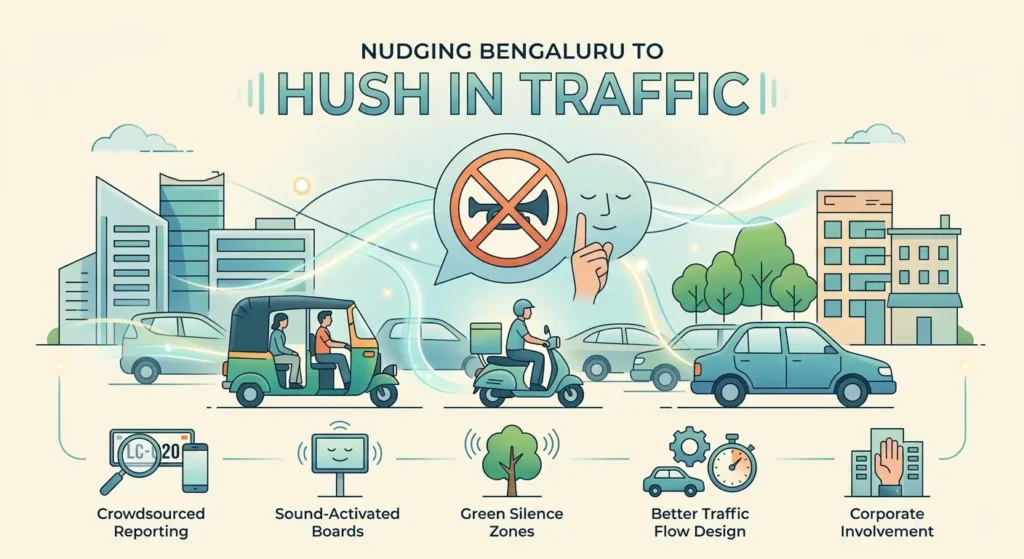
Reducing honking in a city like Bangalore where traffic congestion, impatience, and lack of enforcement contribute to excessive honking requires a combination of behavioral nudges, awareness campaigns, infrastructure tweaks, and enforcement. Here’s a multifaceted approach to nudge people rather than force them:
1. Psychological and Behavioral Nudges
a. ‘Silent Zone’ Visual Cues
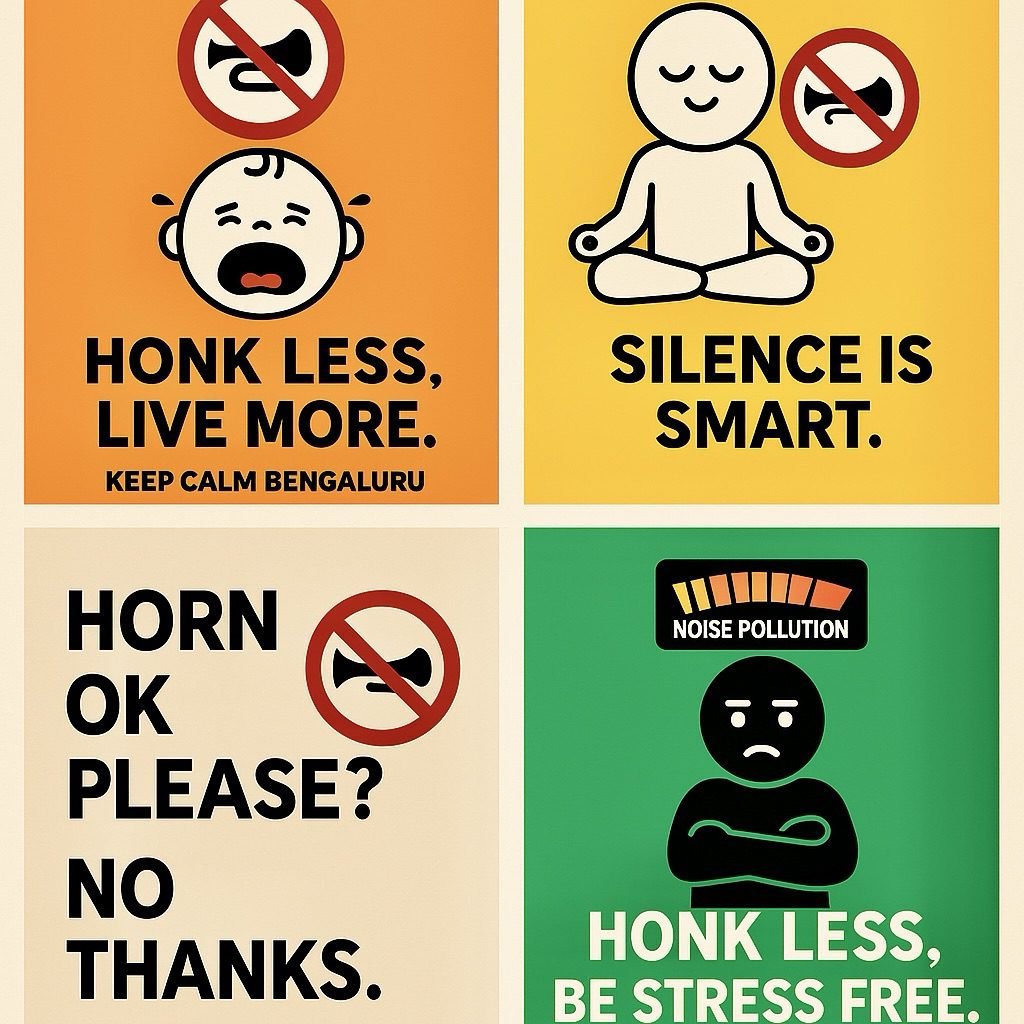
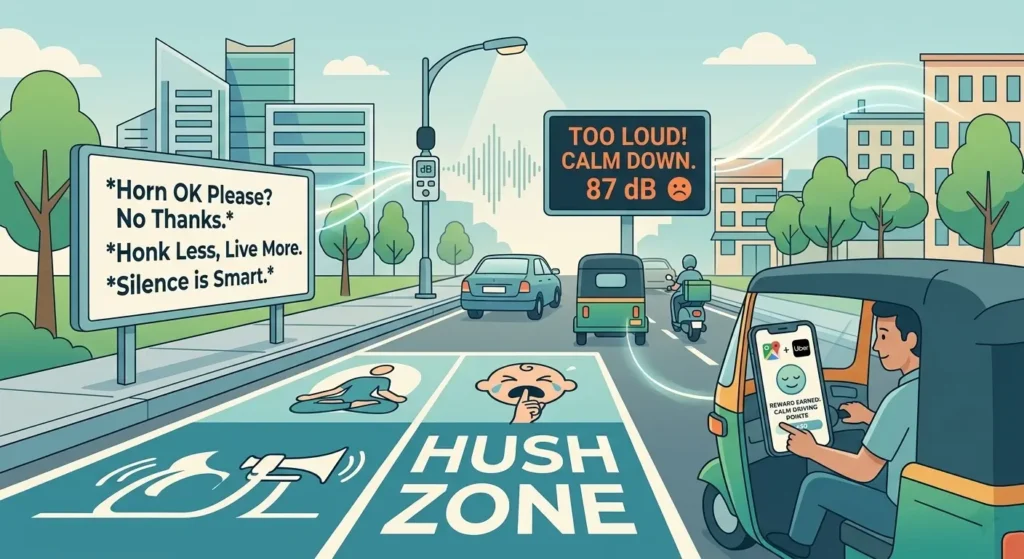
Paint ‘No Honking’ zones near schools, hospitals, residential areas, and tech parks with bright, eye-catching graphics (e.g., crying babies, meditating icons). Use funny or thought-provoking slogans: ‘Horn OK Please? No Thanks.’ , ‘Honk Less, Live More.’ , ‘Silence is Smart.’
b. Sound-Activated Boards
Install decibel-triggered message boards: if honking crosses a certain volume threshold, a screen flashes messages like: ‘Too Loud! Calm Down.’, ‘Noise Pollution Detected, Don’t Be That Guy.’
c. Reverse Incentives
Collaborate with apps like Google Maps or Ola/Uber to reward drivers who maintain calm driving behaviors (possibly inferred through smartphone sensors + minimal horn use in silent zones).
2. Cognitive Awareness and Education
a. Short Educational Campaigns
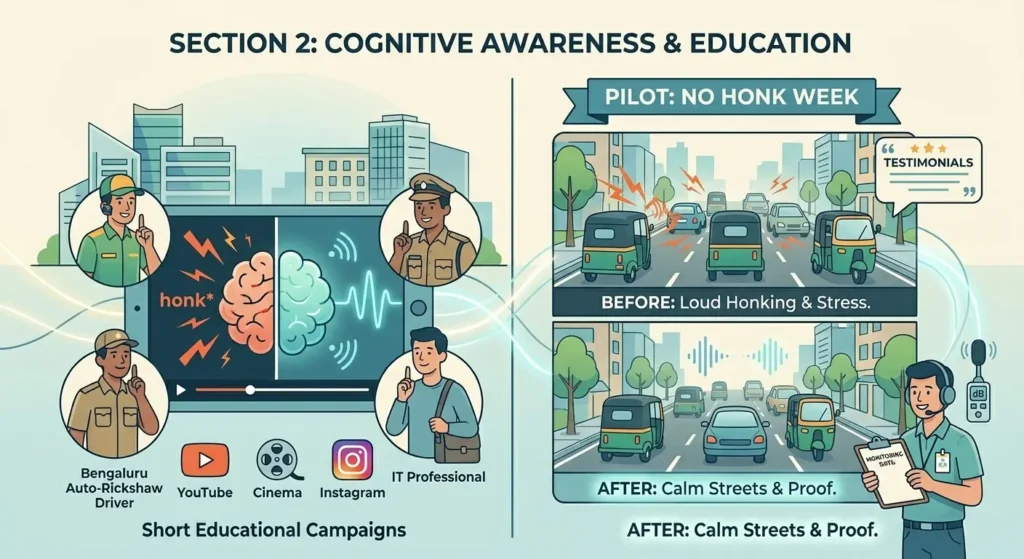
Run short animated videos on YouTube, local cinemas, and Instagram: Show how noise impacts health, concentration, and productivity. Include relatable Bangalore-specific humor (like auto drivers, traffic cops, IT crowd).
b. ‘Before-After’ Experiments
Pilot a ‘No Honk Week’ in selected neighborhoods with volunteers and monitor effects. Share results and testimonials to show life can go on without honking.
3. Soft Enforcement and Public Accountability
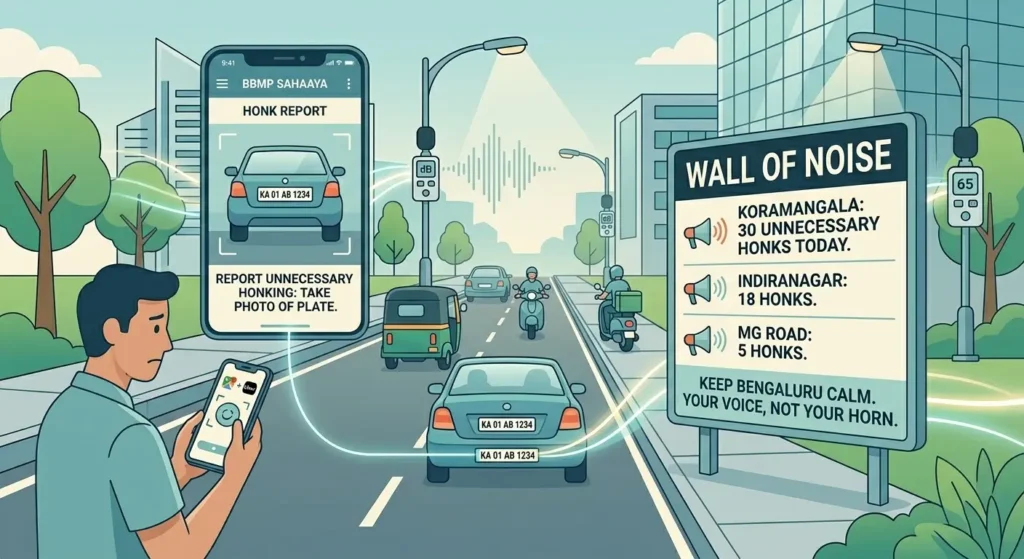
a. Crowdsourced Reporting
Use apps like BBMP Sahaaya or create a new lightweight tool where citizens can report unnecessary honking with license plate photos.
b. Gentle Public Shaming
Display ‘Wall of Noise’, a physical or digital board that lists frequently offending areas or anonymized stats like: ‘30 unnecessary honks detected in Koramangala today.’
4. Infrastructure & Design Nudges
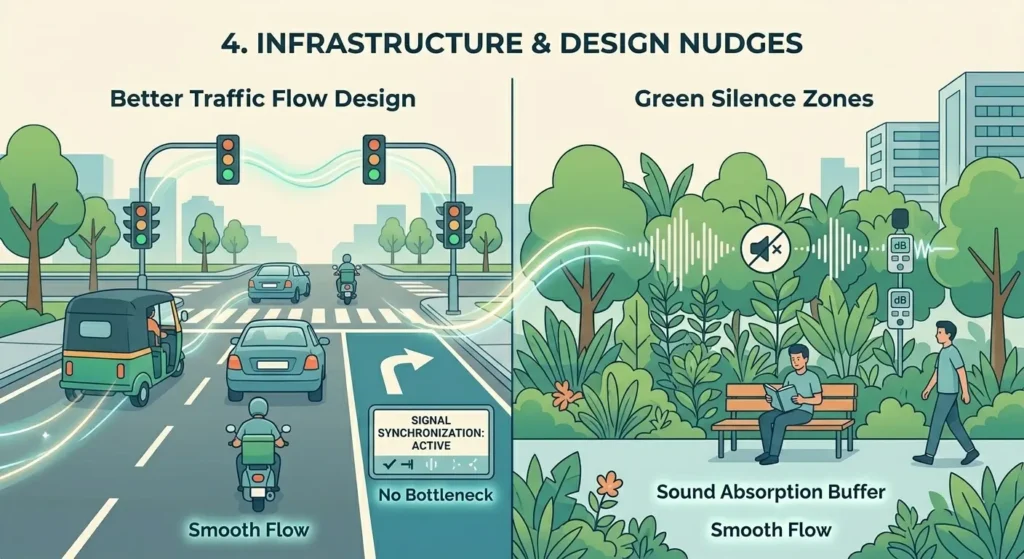
a. Better Traffic Flow Design
Improve signal synchronization, create dedicated lanes for turns, and prevent bottlenecks that trigger impulsive honking.
b. ‘Green Silence’ Zones
Plant dense greenery and buffer landscaping near high-honk areas plants not only absorb sound but also signal calm.
5. Community and Corporate Involvement
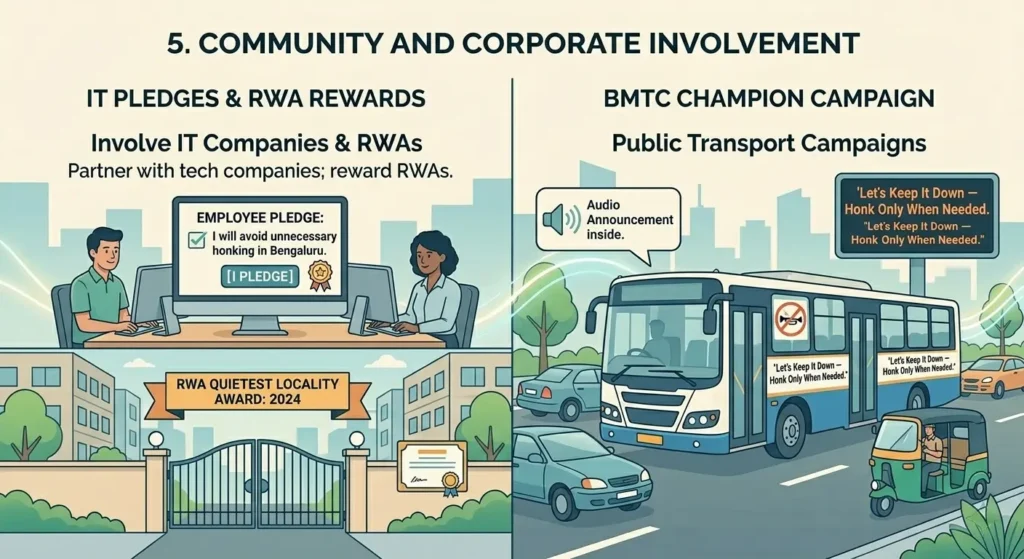
a. Involve IT Companies & RWAs
Have tech companies include ‘No Honk Pledges’ during onboarding. Reward communities that reduce honking in their localities.
b. Public Transport Campaigns
BMTC buses can run stickers and announcements inside saying ‘Let’s Keep It Down – Honk Only When Needed.’