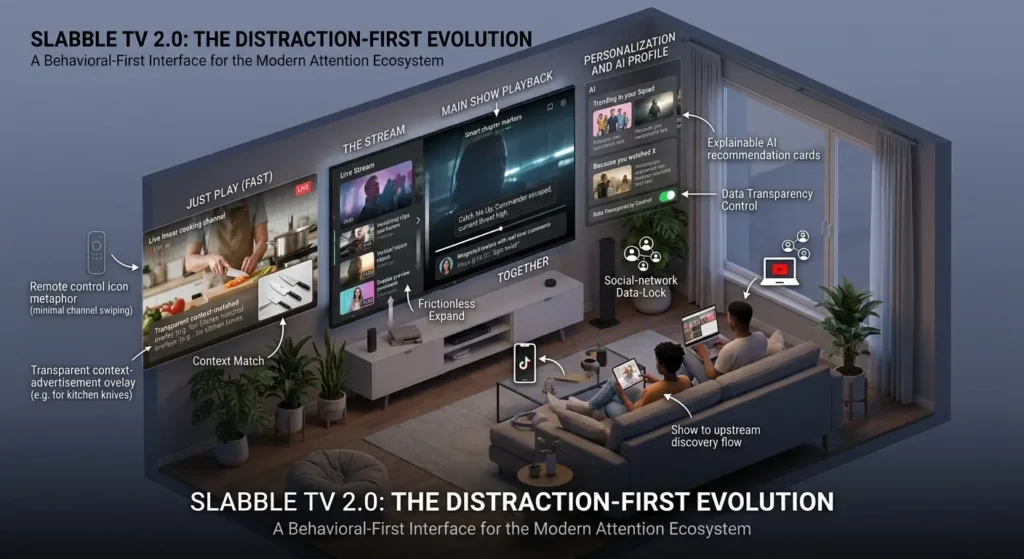
Designing for the Fragmented Viewer
When Slabble TV launched in 2012, the streaming landscape was simple: users opened an app, browsed a grid, and gave the screen their undivided attention. We designed for a world where streaming was a focused, destination activity.
That world no longer exists.
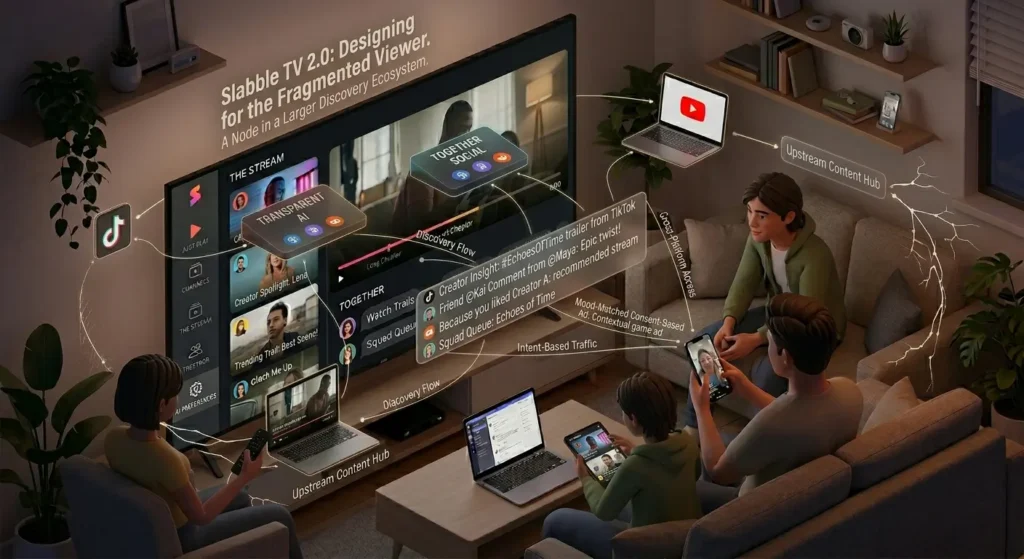
Today, attention is fractured. Viewers split their screen time between long-form streaming and short-form social video often simultaneously. Gen Z and Gen Alpha don’t search for content; they wait for their favorite creators to recommend it.
Slabble TV 2.0 is a ground-up rethinking of the streaming interface, designed for the behavioral, technological, and cultural realities of 2026.
The New Behavioral Baseline
To redesign Slabble, we had to acknowledge three massive shifts in how human attention actually works today:
- The Discovery Shift
The discovery problem is no longer solved at the app level. It’s solved upstream on platforms like TikTok, Instagram and YouTube. By the time a user opens a streaming app, they arrive with intent. - The Swipe Instinct
Gen Alpha has internalized the vertical swipe as the default navigation gesture. A horizontal scroll grid feels like an antiquated interaction language. - Attention Residue & The Second Screen
Multitasking is the default. Designing for undivided attention is unrealistic. The challenge is no longer keeping eyes on the screen, but remaining meaningful when a user’s attention is constantly switching contexts, leaving cognitive residue behind with every distraction.
Architecting Slabble TV 2.0
We moved away from traditional content categories and rebuilt the information architecture around actual behavioral modes, paying special attention to the rapid growth of ad-supported consumption.
Just Play: Rethinking the FAST Tier UI
With subscription fatigue at an all-time high, the Free Ad-Supported TV (FAST) tier couldn’t feel like a degraded experience. We designed the Channels surface specifically to combat decision fatigue for the Linear Migrant and the background viewer:
- The TV-Native Metaphor
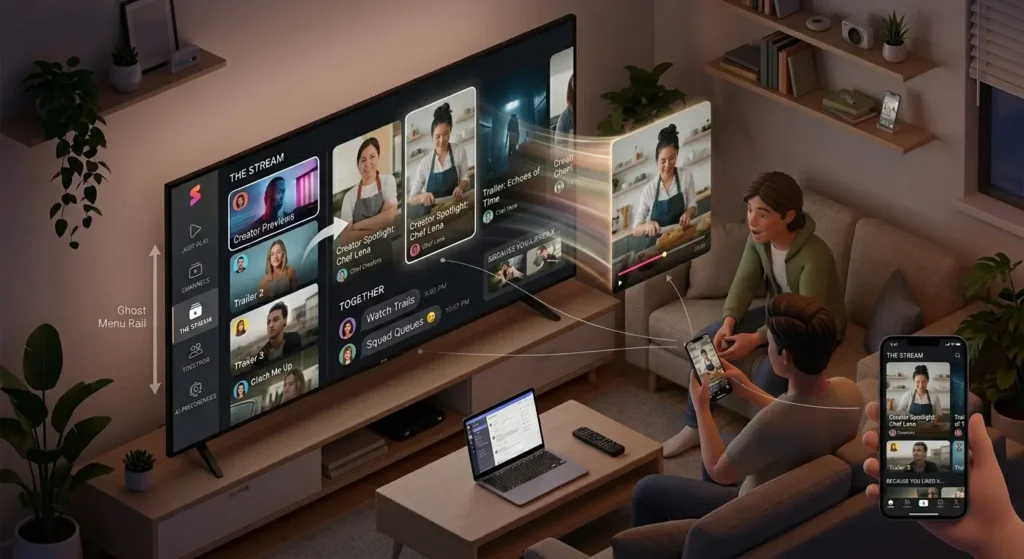
Instead of an app grid, the interface mimics a remote control. Users enter a full-screen linear playback mode with a subtle ghost menu rail on the left. Channel surfing is reduced to a simple horizontal swipe. - Data-Minimalist Trust Architecture
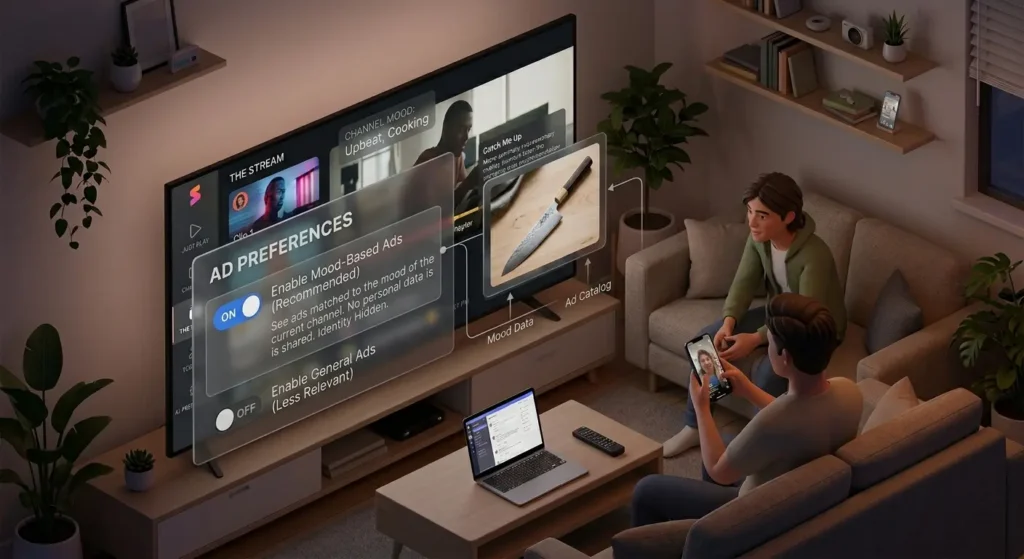
In an era of high privacy anxiety, opaque programmatic ads are a liability. The FAST tier UI incorporates a transparent, consent-based targeting model. Users have persistent, visible control over their ad preferences, shifting the dynamic from extractive surveillance to a clear, equitable value exchange. Ads are contextually matched to the mood of the channel rather than aggressively retargeted across the web.
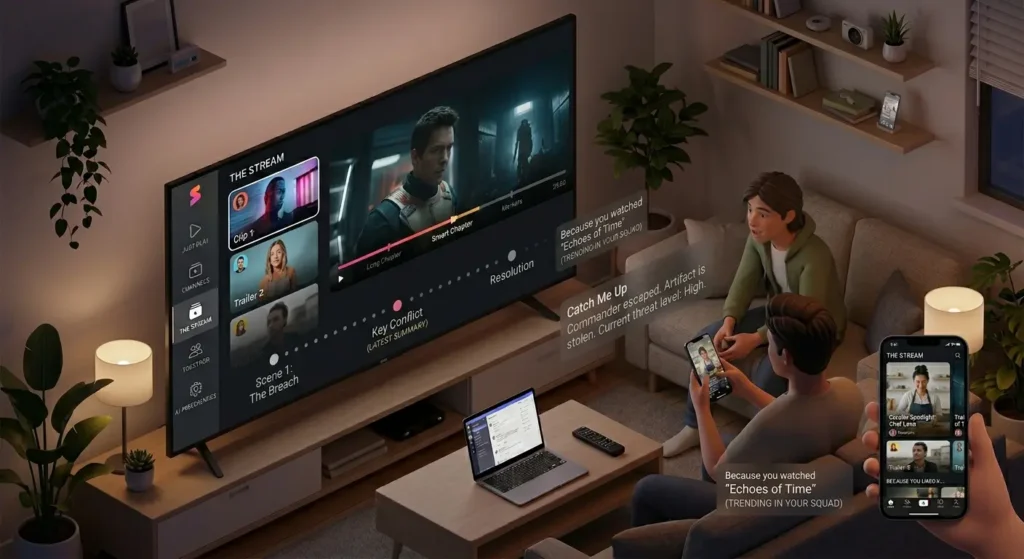
The Stream (Frictionless Discovery)
Rather than a static catalog, users can enter a vertical-scroll, short-form discovery surface. It’s a swipeable feed of trailers, clips, and creator previews. Swiping up seamlessly expands a clip into the full episode without breaking the browsing state reducing the friction of committing to a 45-minute show.
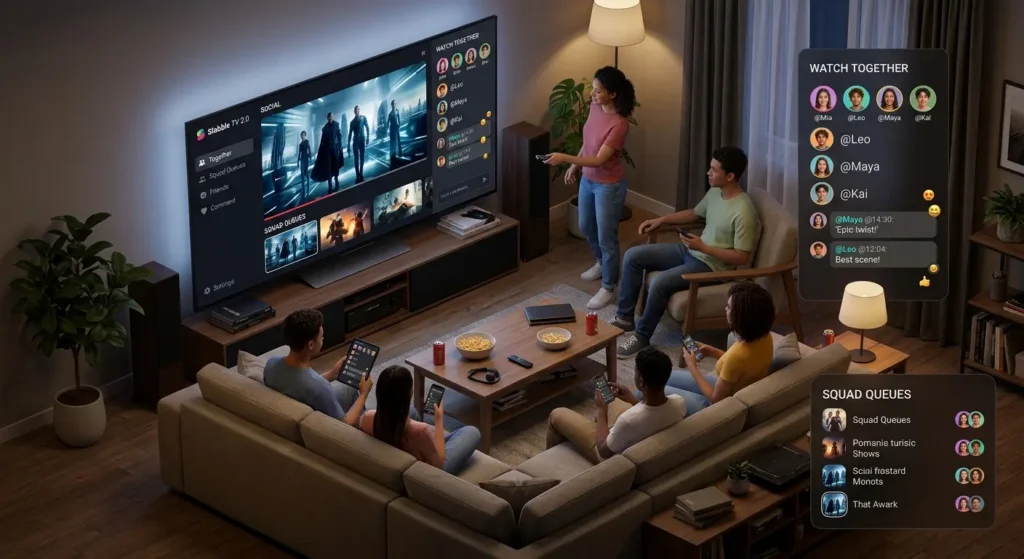
Together (Social-First Viewing)
Social interaction isn’t a supplementary feature; it’s the core. We elevated features like real-time Watch Together, asynchronous Watch Trails (timestamped comment threads), and Squad Queues (shared watchlists) to the primary navigation.
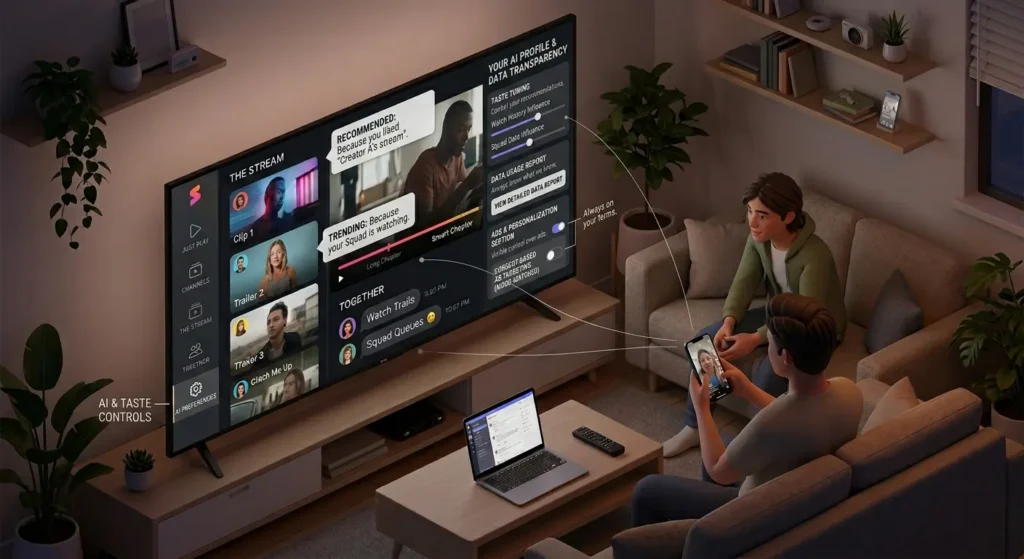
Multi-Attention & Ambient UI
The interface is designed to support divided attention. We integrated smart chapter markers and catch me up micro-summaries for users re-entering a show after looking away. Visually, the app defaults to an adaptive, Always-On dark mode, reducing eye fatigue during evening binges while remaining functional during daytime mobility.
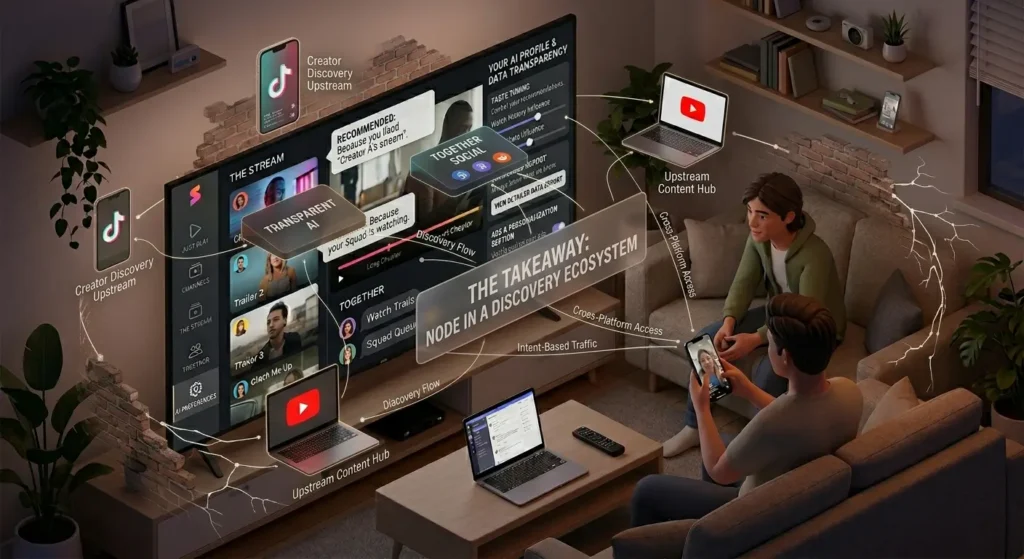
Transparent AI
Personalization is table stakes, but trust is the differentiator. Every AI-driven recommendation includes a lightweight, human-readable explanation (e.g., Because you watched X or Trending in your squad). We made privacy settings a feature, allowing users to visibly tune their own taste profiles without feeling surveilled.
The Takeaway
Slabble TV 2.0 recognizes that a modern streaming platform must operate as a node in a larger discovery ecosystem, rather than a walled garden.
By aligning the interface with the actual behavioral triggers of modern viewers, embracing the swipe, designing for the distracted, and making the algorithm transparent, we’ve created a platform ready for the AI-native streaming era.