When Your Watch Means Well… But Misses the Moment
Let’s be honest-most of us turned to wearables to feel more in control of our health. Track your sleep. Close your rings. Get that buzz when you’ve been sitting too long.
These devices are loaded with good intentions. Built-in ‘nudges’ are there to help us build better habits, take small steps toward well-being, and stay a little more mindful in our busy lives.
But sometimes… the nudge nudges too hard.
And instead of feeling supported, we feel judged. Interrupted. Or worse anxious.
Welcome to the world of reverse nudges in wearable tech: when digital wellness crosses the line from helpful to… kind of exhausting.
What’s a Reverse Nudge?
In theory, a nudge is a gentle suggestion a well-designed cue that helps you make a good choice without forcing your hand. Drink water. Take a breath. Go for a walk.
But a reverse nudge? That’s when the message misses the mark when a well-meaning feature ends up creating stress, friction, or the exact opposite behavior it was designed for.
And in the world of wearables, where we’re constantly being pinged, tracked, and reminded, it happens more than you think.
Sleep Scores That Steal Your Sleep
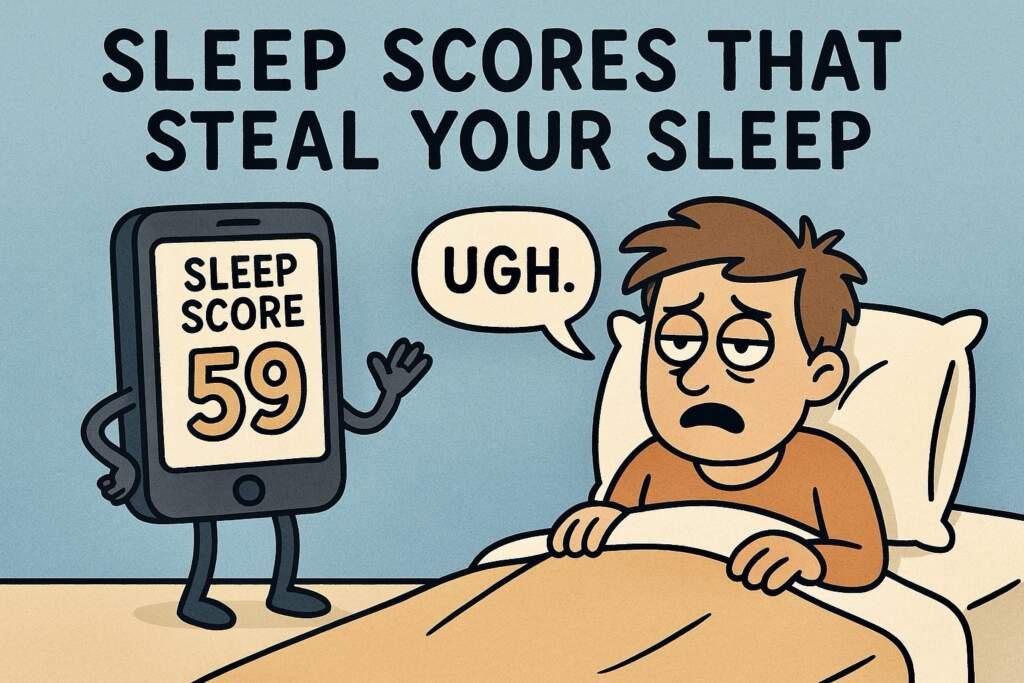
You wake up, stretch, check your watch and boom:
Sleep score: 67 – Fair.
You thought you slept fine. But now you’re questioning everything.
Was it that late coffee? Too much screen time? Should you have gone to bed earlier?
This is the sleep score spiral, and it’s real. Devices like Oura, Fitbit, and Apple Watch mean well, they want to help you rest better. But for many people, tracking sleep leads to sleep anxiety, not better rest.
You start obsessing over perfect sleep metrics. Ironically? That worry can make your sleep worse.
Intent: Encourage better rest.
Impact: Create pressure and anxiety.
That’s a reverse nudge.
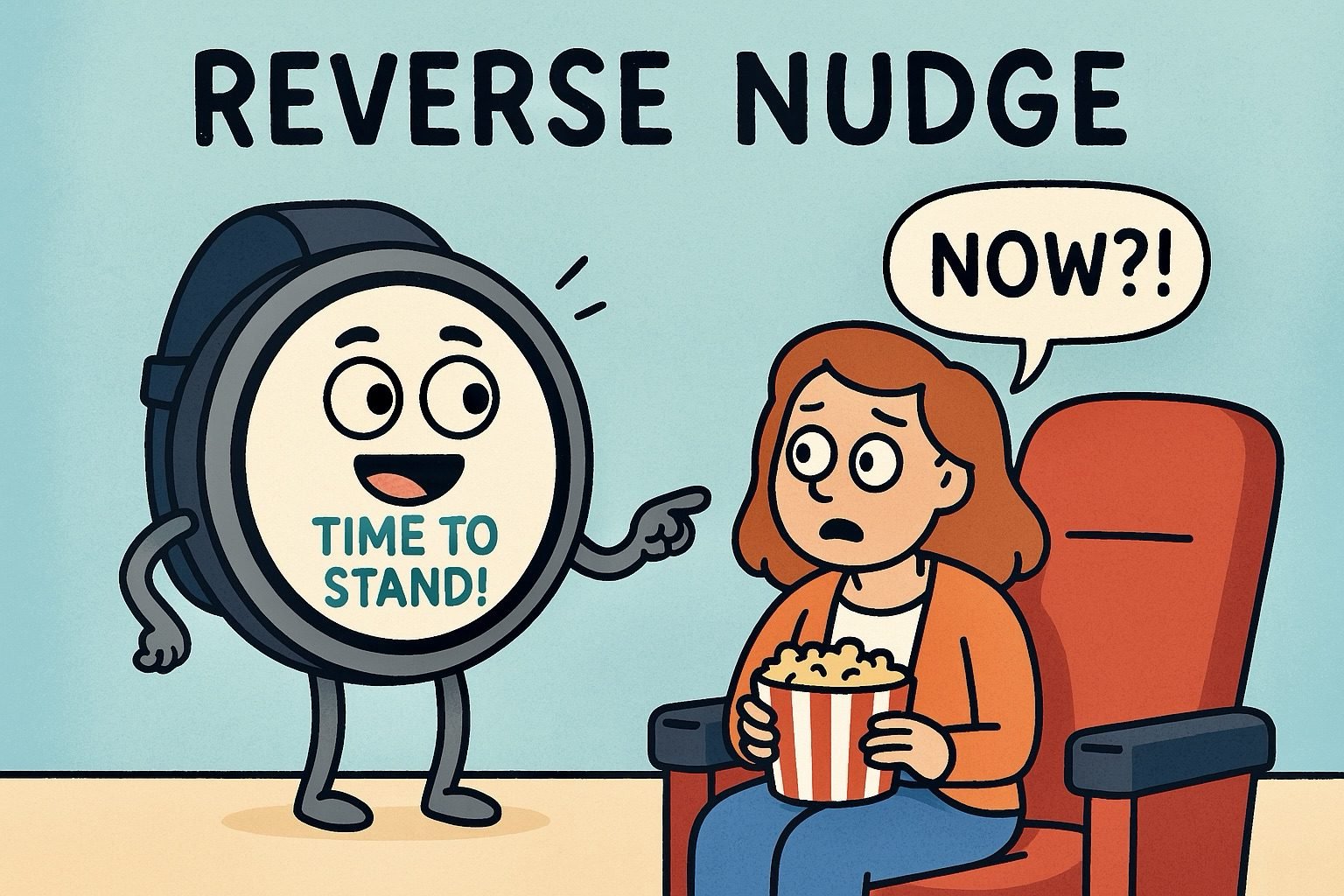
Time to Stand : Even in a Movie Theater
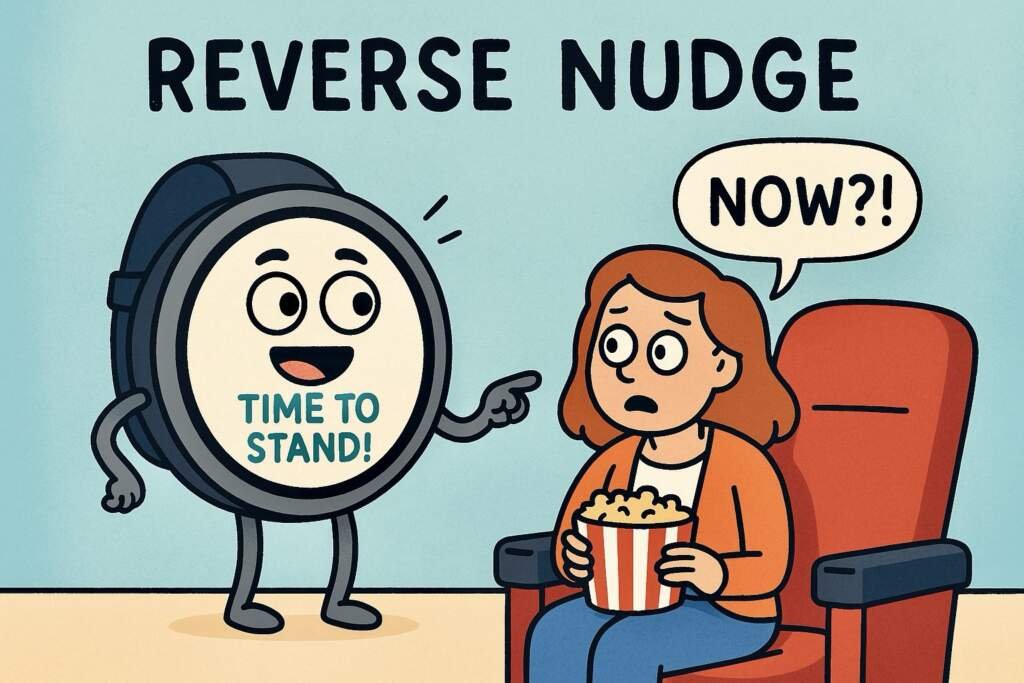
Picture this: You’re watching a film, deep in the story. The room is dark. Silent and you’ve set the watch to Theater/Movie mode.
Suddenly, a buzz. Your Apple Watch gently insists:
Time to stand!
It’s trying to help, of course. Sitting too long isn’t great for your health. But here’s the thing: you’ve set your Focus mode to Theater. You’ve told the device to chill. And still, it pushes through.
This tiny interruption may seem like no big deal. But over time, these moments add up. They signal that the tech isn’t really listening. And when even your do not disturb isn’t respected, the nudge becomes noise.
Intent: Support movement and wellness.
Impact: Ignore context, break immersion, cause frustration.
Breathe Alerts That Stress You Out
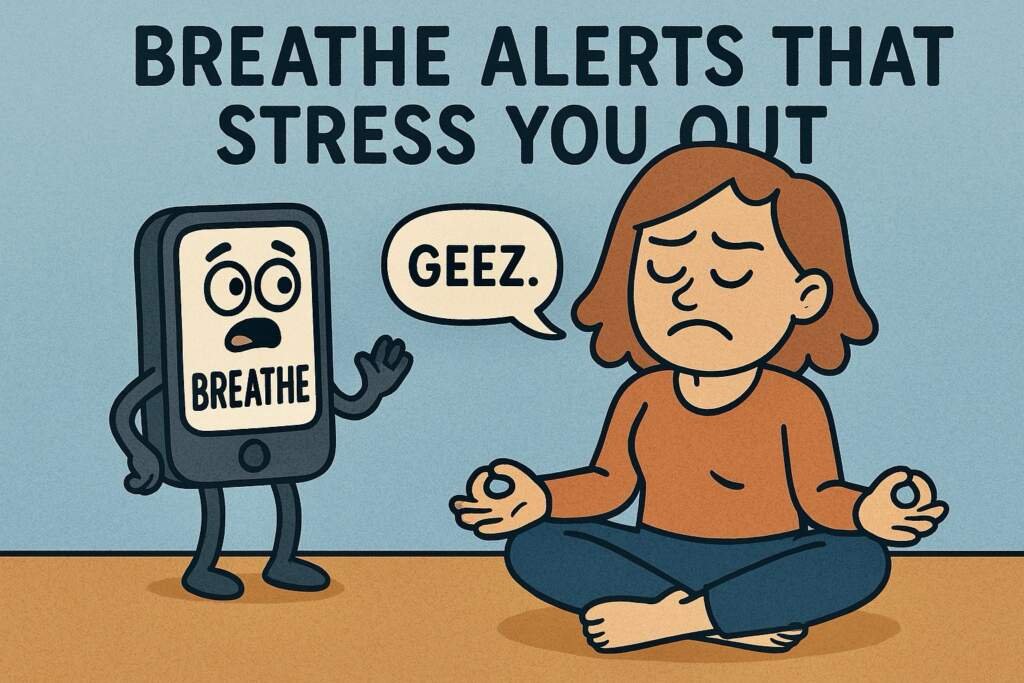
You’re running between meetings. Juggling messages. Staring down your to-do list. And then, like a well-meaning yoga teacher barging into your office:
Take a moment to breathe.
Sure, it’s a lovely idea. But when the prompt comes in the middle of a chaotic workday or while you’re already anxious, it can feel like someone telling you to just relax while you’re drowning.
Sometimes the timing is so off, it borders on patronizing.
Intent: Nudge you toward mindfulness.
Impact: Feel invasive or ill-timed. Another reverse nudge.
Step Goals That Become Guilt Traps
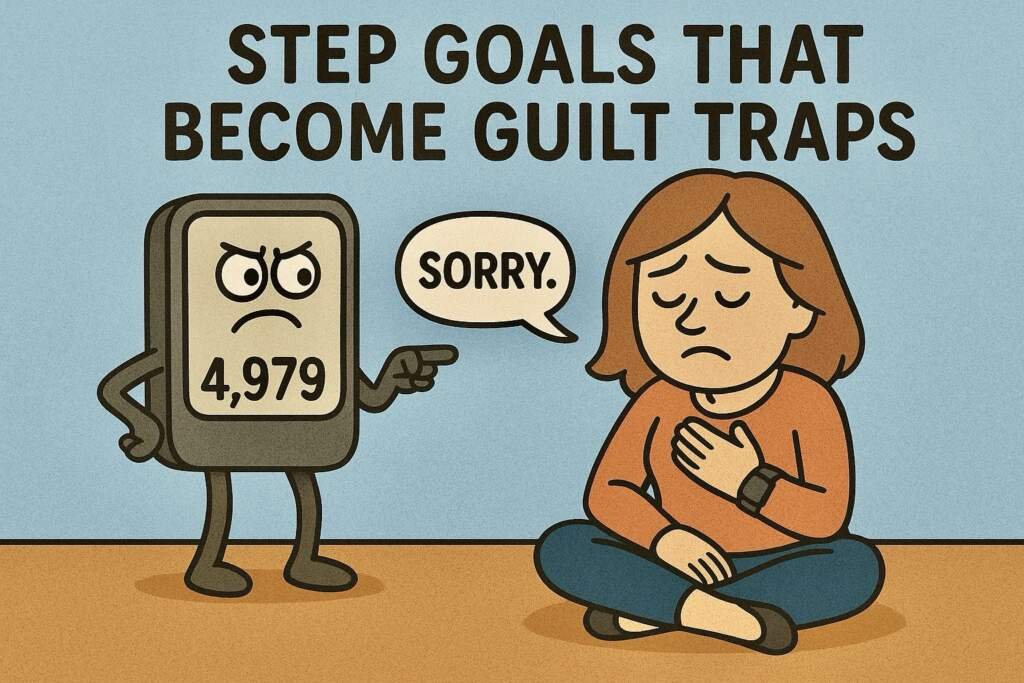
We’ve all had those days. You’re tired. It’s raining. You’ve walked a bit but not enough. You check your Fitbit or Apple Watch and there it is:
You’re only 2,000 steps away from your goal!
You groan. You feel bad. Maybe you push yourself to walk laps around your kitchen. Maybe you ignore it and feel guilty anyway.
For some people, step goals are genuinely motivating. But for others, especially those with chronic illness, injuries, or simply different priorities, they become a source of daily shame.
When movement becomes about meeting the number rather than feeling good, the nudge loses its heart.
Heart Rate Alerts That Trigger Panic
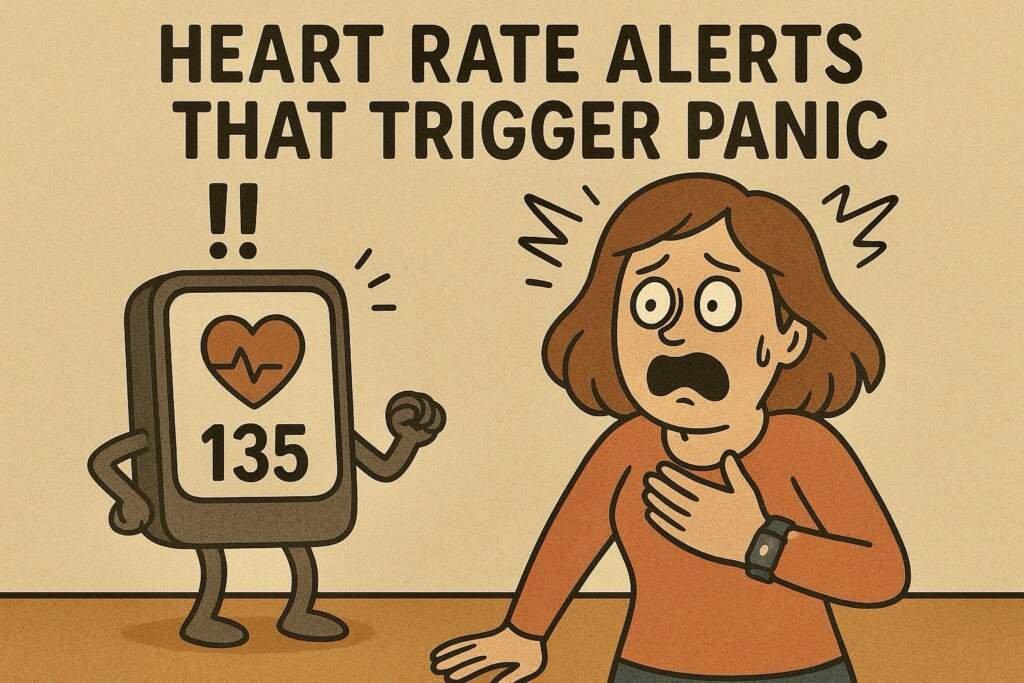
One of the most well-meaning features of wearables is real-time heart rate monitoring. It can literally save lives.
But sometimes, the device buzzes with:
Your heart rate is unusually high while you appear inactive.
Cue the internal monologue:
Is something wrong? Am I having a panic attack? Should I go to the doctor?
For users with anxiety, this creates a loop: the alert causes stress → stress raises heart rate → device buzzes again.
The watch becomes a catalyst for fear, not reassurance.
So… What’s the Fix?
The solution isn’t to get rid of these features. It’s to design them better, with more empathy and context.
A few ideas:
Let users customize when and how nudges happen. Respect Focus and Do Not Disturb modes. Use language that supports, not shames. Build in more flexibility and nuance around health metrics, because wellness isn’t one-size-fits-all.
Final Thought: Wellness, Not Surveillance
At their best, wearables empower us. They help us listen to our bodies, spot patterns, and make small changes that lead to better health.
But when they become too pushy when the nudges become pressure, they can hurt more than help.
So the next time your wrist buzzes with a friendly suggestion, ask yourself:
Is this helping me? Or is it just another voice telling me what I should be doing?
Because real wellness isn’t just about steps, rings, or scores.
It’s about feeling human in a world full of data.