
Navigating Trust & Privacy in Finance for Shared Goals
Role: Product Design Consultant
Client: Early-Stage FinTech Startup (Bootstrapped)
Scope: User Research, Product Direction, MVP Design
Status: Work in Progress (MVP/POC Phase)
1. Overview
Nudget is a privacy-first expense tracking concept designed for India’s UPI-driven economy. The project explored a simple question:
If digital payments have become effortless, why do people still struggle to manage their finances consistently?
Through user research, competitive analysis and design principles, I helped shape the product direction from a traditional expense tracker into a system that reduces tracking friction while building user trust.
2. User Research

Managing money is easier than ever, but tracking it remains surprisingly difficult.
To understand why, we conducted research with 51 salaried professionals across urban India.
While most participants had tried expense tracking at some point, very few maintained the habit consistently.
The challenge wasn’t a lack of budgeting tools. Users faced two recurring barriers:
Tracking Requires Constant Effort
People intended to track expenses, but rarely remembered to do so at the right moment.
After making a payment, recording it felt like an extra task that could always be postponed until later and later rarely happened.
Trust Outweighed Convenience
Many participants were uncomfortable granting financial apps access to personal data.
For these users, the risks of surveillance, data misuse, or breaches felt immediate and tangible, while the benefits of budgeting remained distant and uncertain.
This created a fundamental design challenge:
How might we create an expense-tracking experience that feels both effortless and trustworthy?
3. Understanding the Existing Landscape
Understanding the Existing Landscape
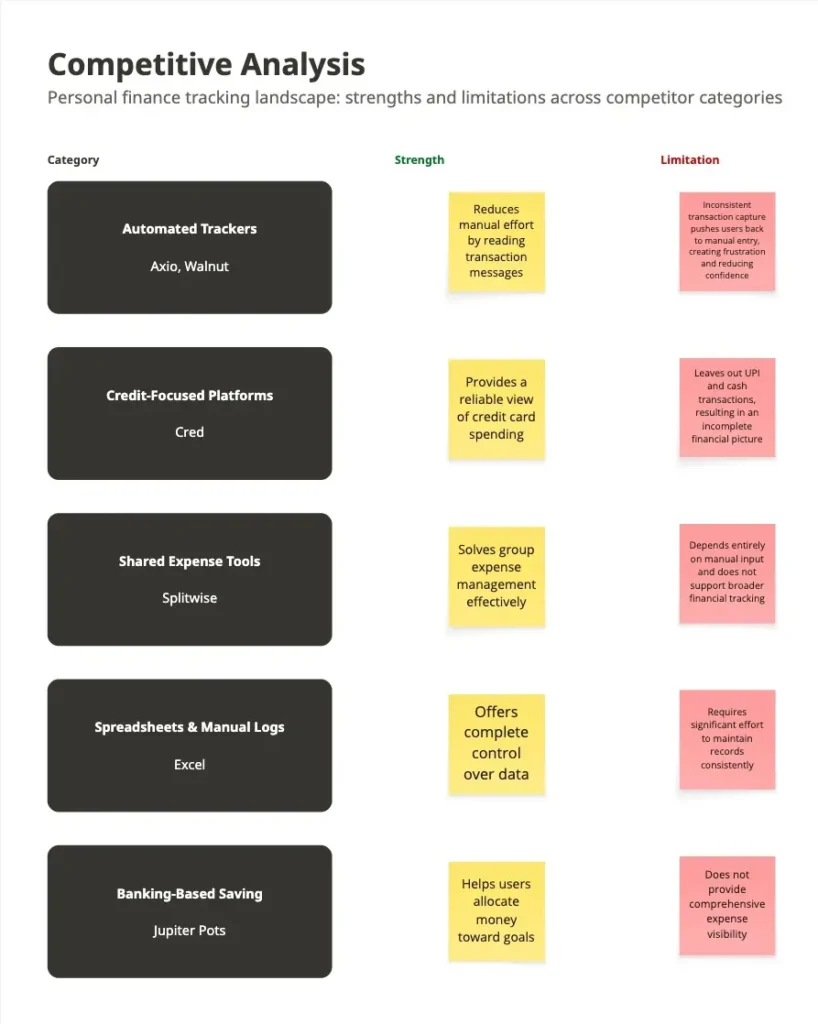
I mapped the strengths and limitations of popular finance tools to identify where users were still underserved.
Automated Trackers
Products such as Axio and Walnut reduce manual effort by reading transaction messages.
However, inconsistent transaction capture often forces users back into manual entry, creating frustration and reducing confidence in the system.
Credit-Focused Platforms
Cred provides a reliable view of credit card spending but leaves out UPI and cash transactions, resulting in an incomplete financial picture.
Shared Expense Tools
Splitwise solves group expense management effectively but depends entirely on manual input and does not support broader financial tracking.
Spreadsheets and Manual Logs
Many users preferred Excel because it offered complete control over their data.
The trade-off was the significant effort required to maintain records consistently.
Banking-Based Saving Features
Products like Jupiter Pots help users allocate money toward goals but do not provide comprehensive expense visibility.
4. Key Insights
Every solution forced users to compromise between three things:
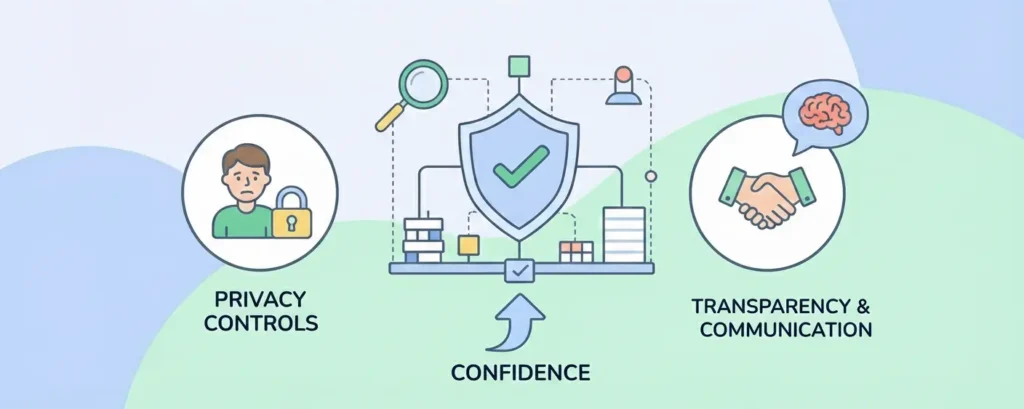
- Convenience
- Meaningful insights
- Privacy
No product successfully delivered all three..
5. User Mindsets
Rather than segmenting users by age or income, I focused on behavior patterns.

A. Passive Trackers
Users who wanted financial visibility but lacked the time or motivation to maintain tracking habits.
They needed automation that worked quietly in the background.
B. Manual Organizers
Users who valued accuracy and control.
They were willing to invest effort but gradually experienced fatigue from maintaining records across multiple payment methods.
C. Privacy-Conscious Users
Users who actively avoided finance apps because they distrusted how their data would be collected and stored.
This group became the primary design focus because existing products largely ignored their concerns.
6. Product Direction
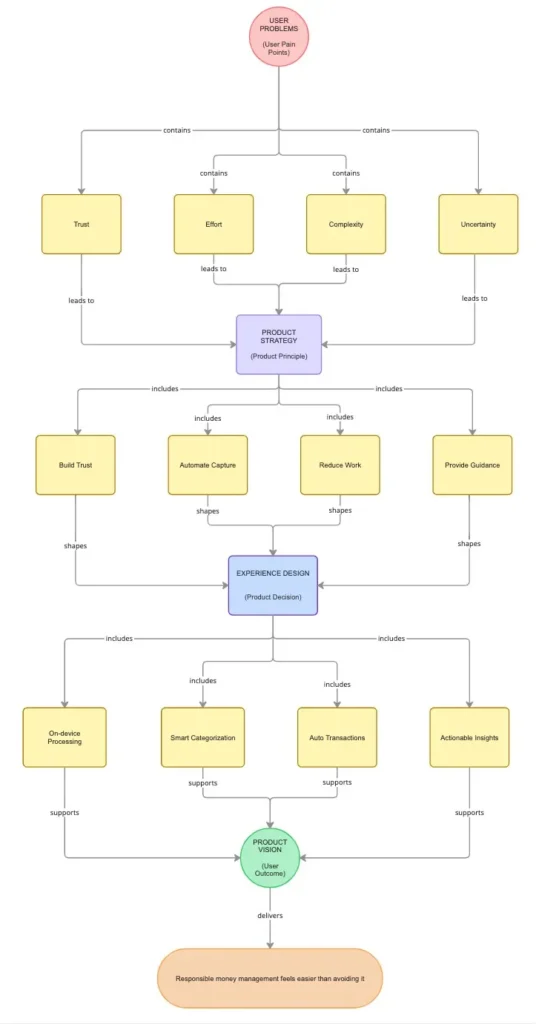
Responsible money management feels easier than avoiding it
The goal was not to create another expense ledger.
The goal was to make responsible money management feel easier than avoiding it.
This led to four core product principles.
a. Build Trust Through Architecture
Privacy could not be treated as a marketing message.
It needed to be reflected in the product’s structure.
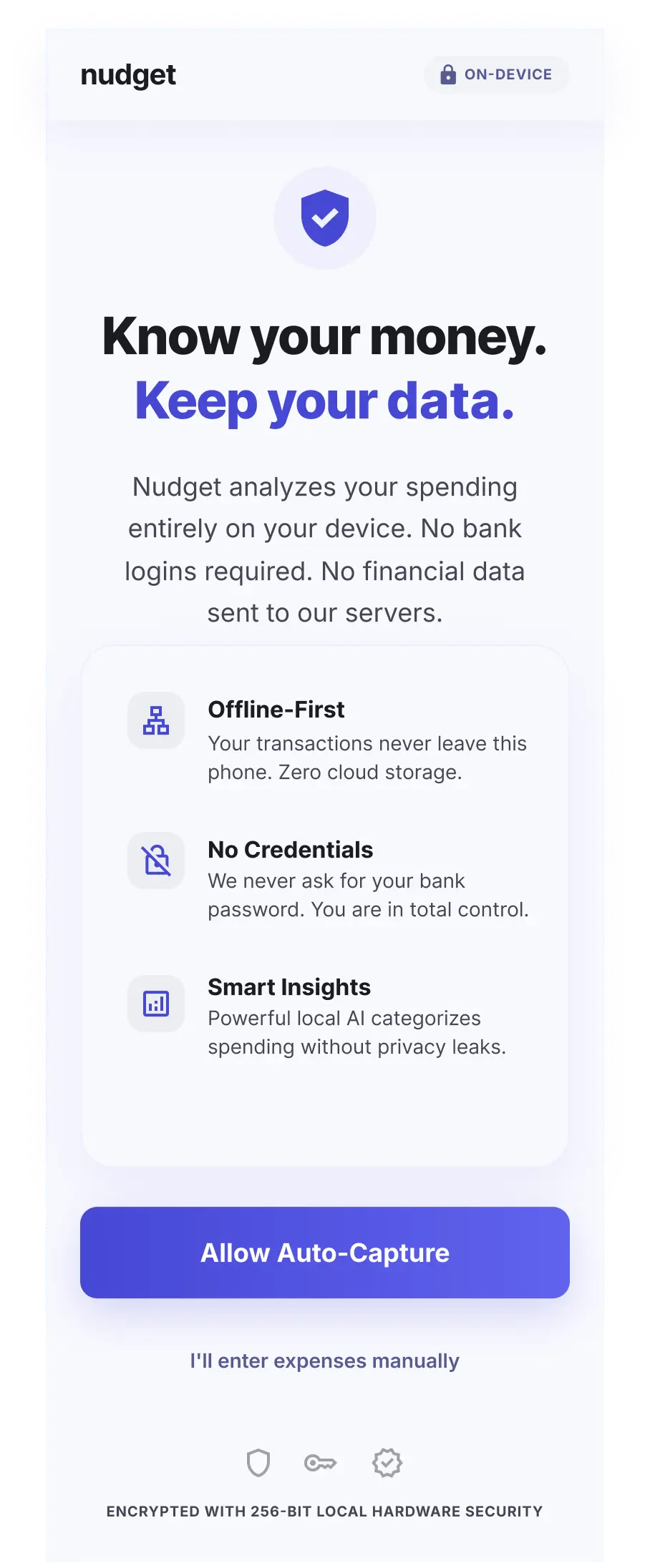
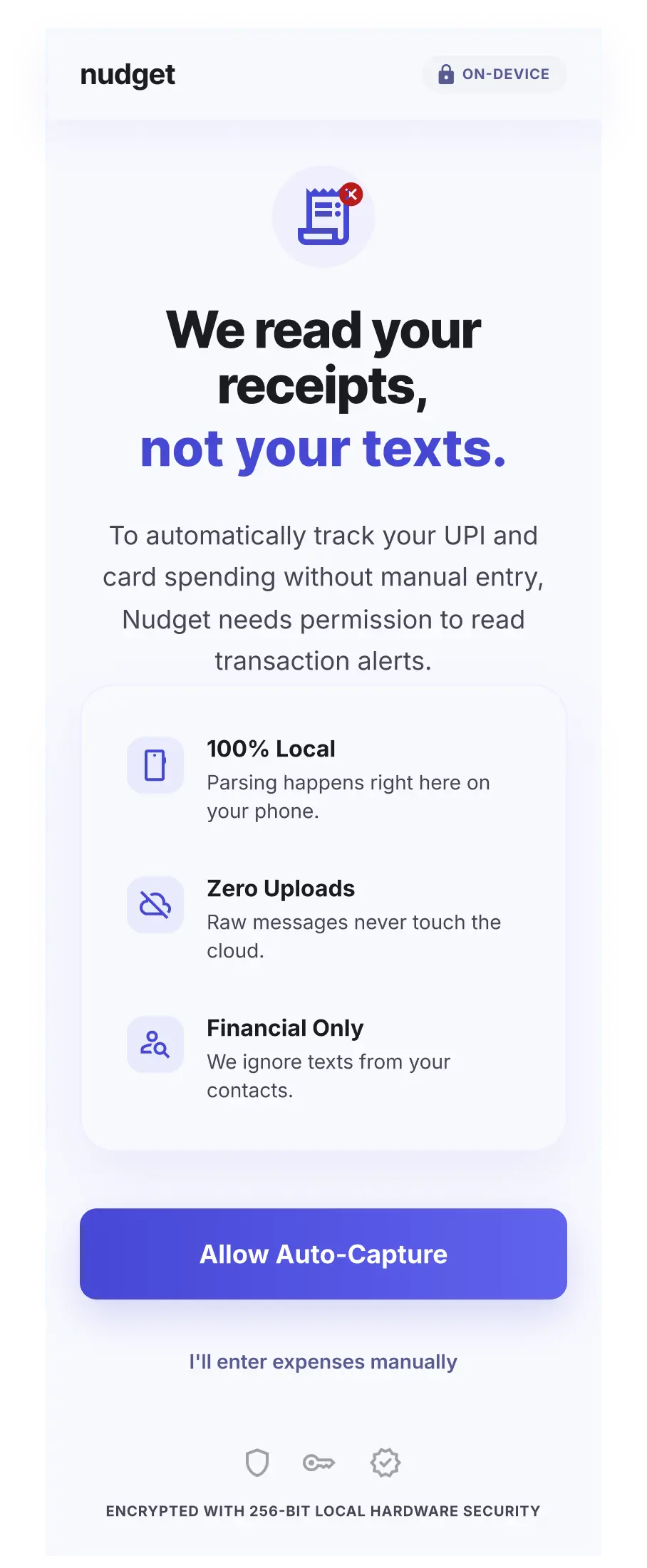
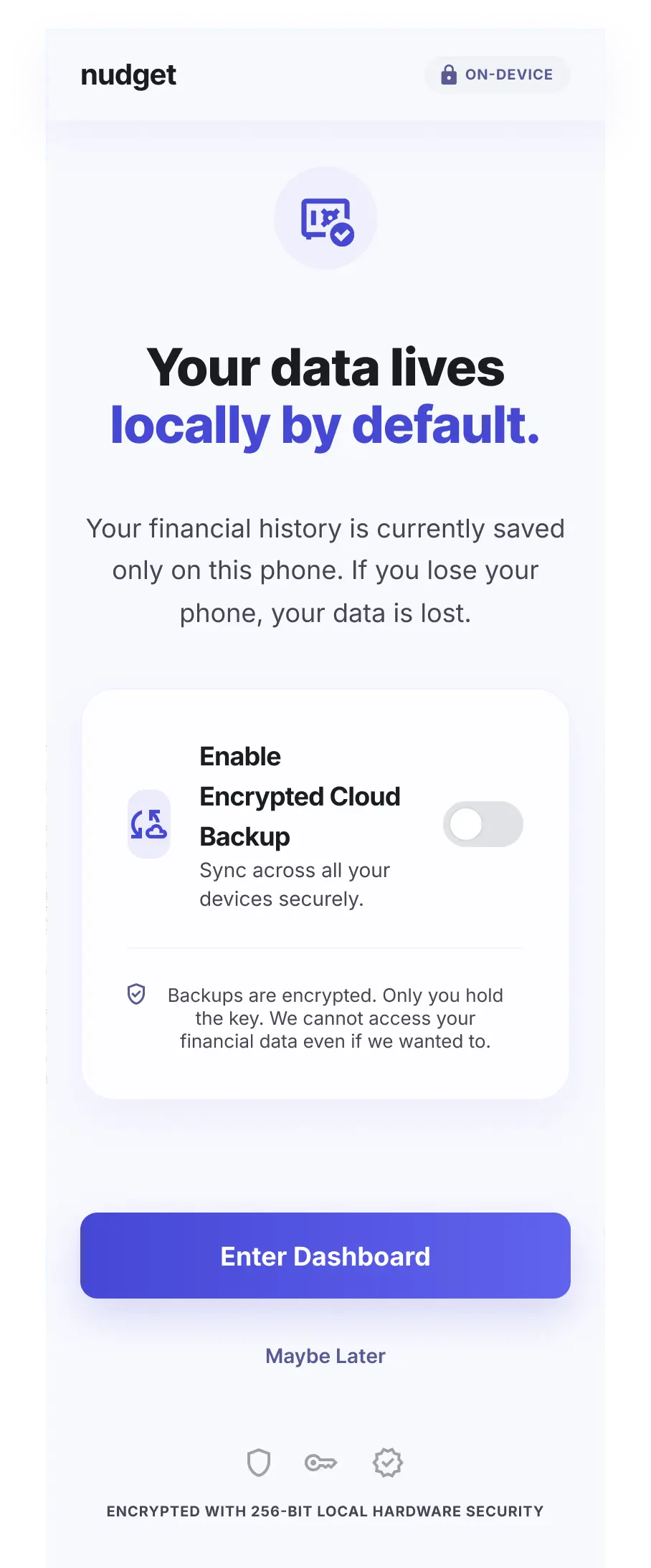
Transactions were processed locally on the device, ensuring sensitive financial information never needed to leave the user’s phone.
Permission requests were contextual, transparent, and optional.
This reduced friction for privacy-conscious users while making system behavior easier to understand.
b. Remove the Burden of Remembering
Users consistently cited time and effort as major obstacles.
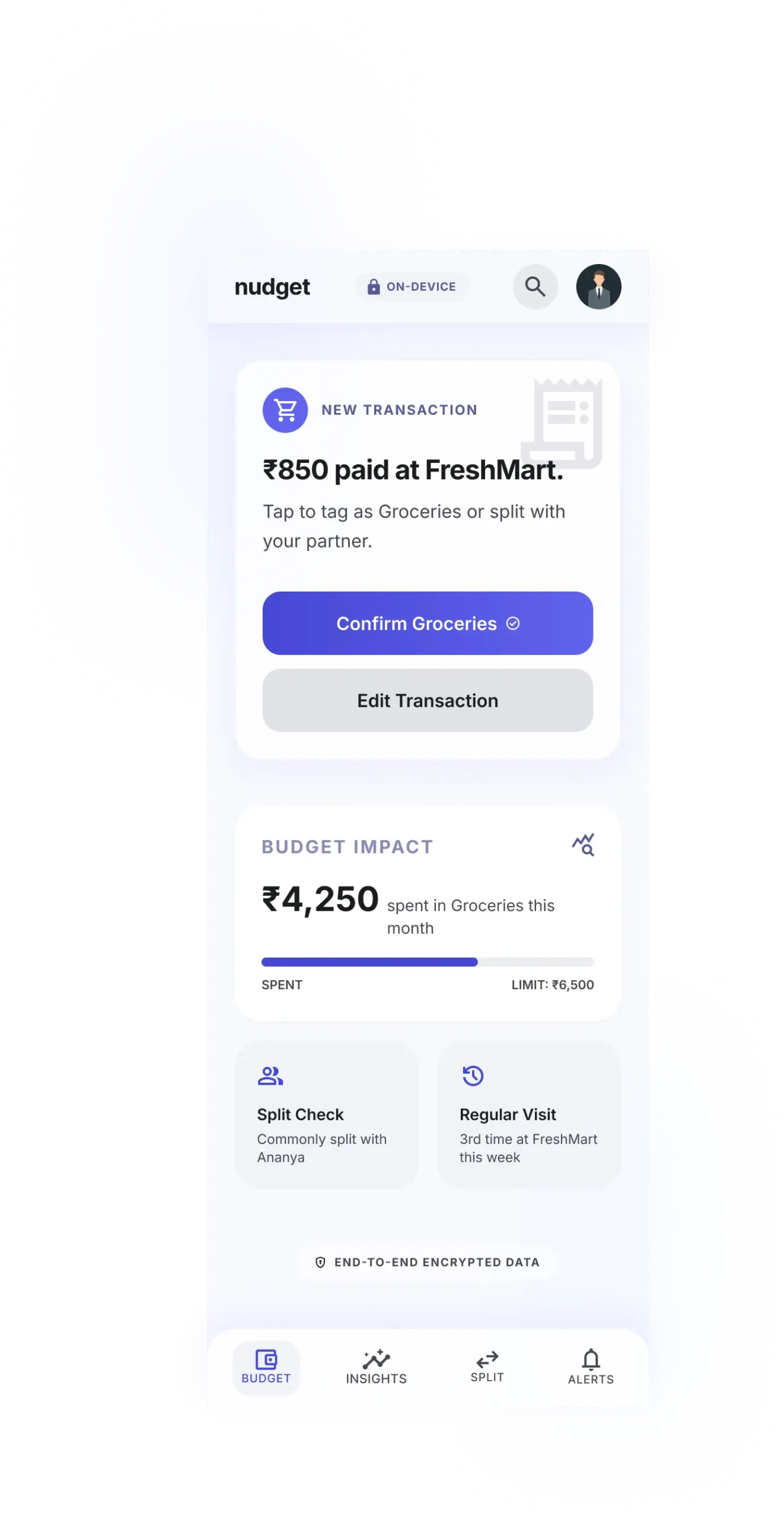
Instead of asking people to remember every transaction, Nudget automatically captured eligible transactions in the background.
The experience worked around existing behavior rather than requiring new habits.
c. Reduce Categorization Effort
Manually assigning categories creates unnecessary work.
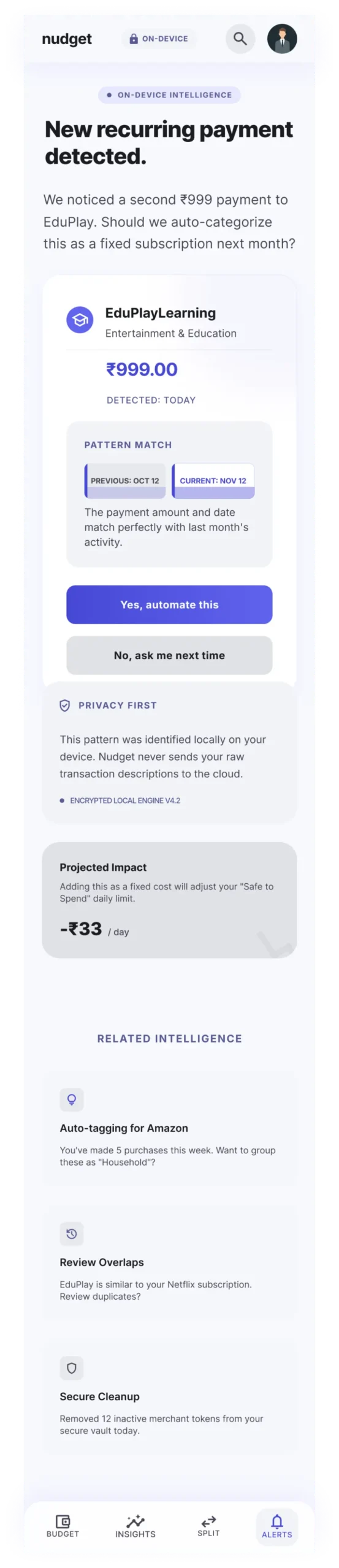
The system learned from recurring merchants and previous user actions, automatically organizing expenses over time while still allowing user control when needed.
d. Turn Data Into Guidance
Participants repeatedly expressed that they did not need more financial data.
They needed help understanding what to do with it.
Instead of focusing on transaction lists and charts alone, the experience emphasized spending patterns, budget health, and progress toward goals.
The objective was to make information actionable rather than merely visible.
7. Designing the Experience
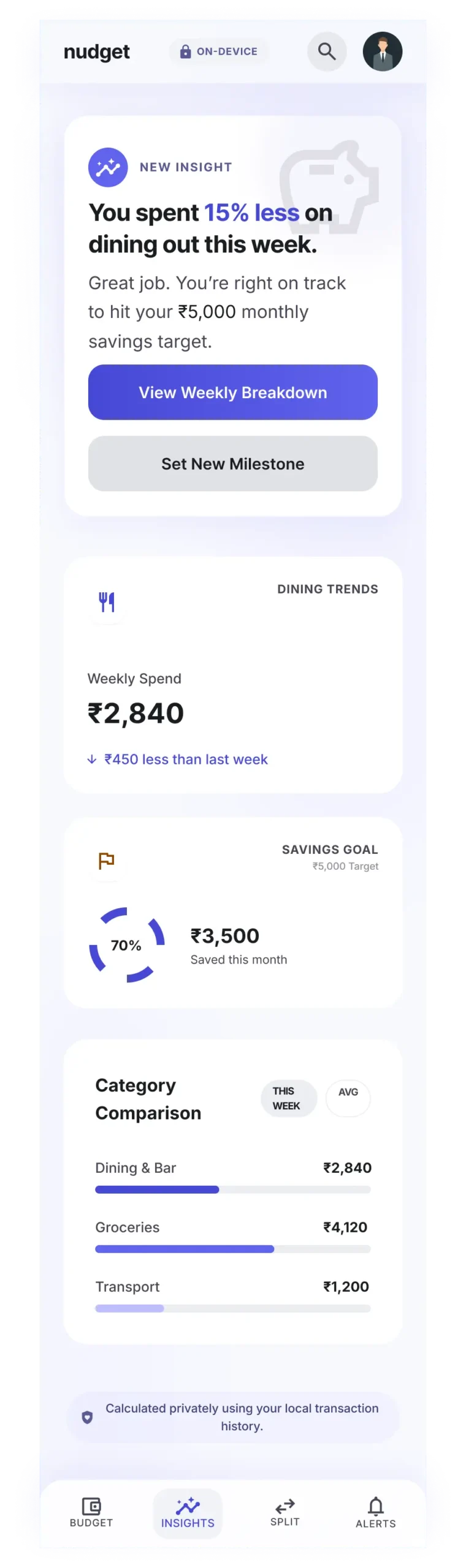
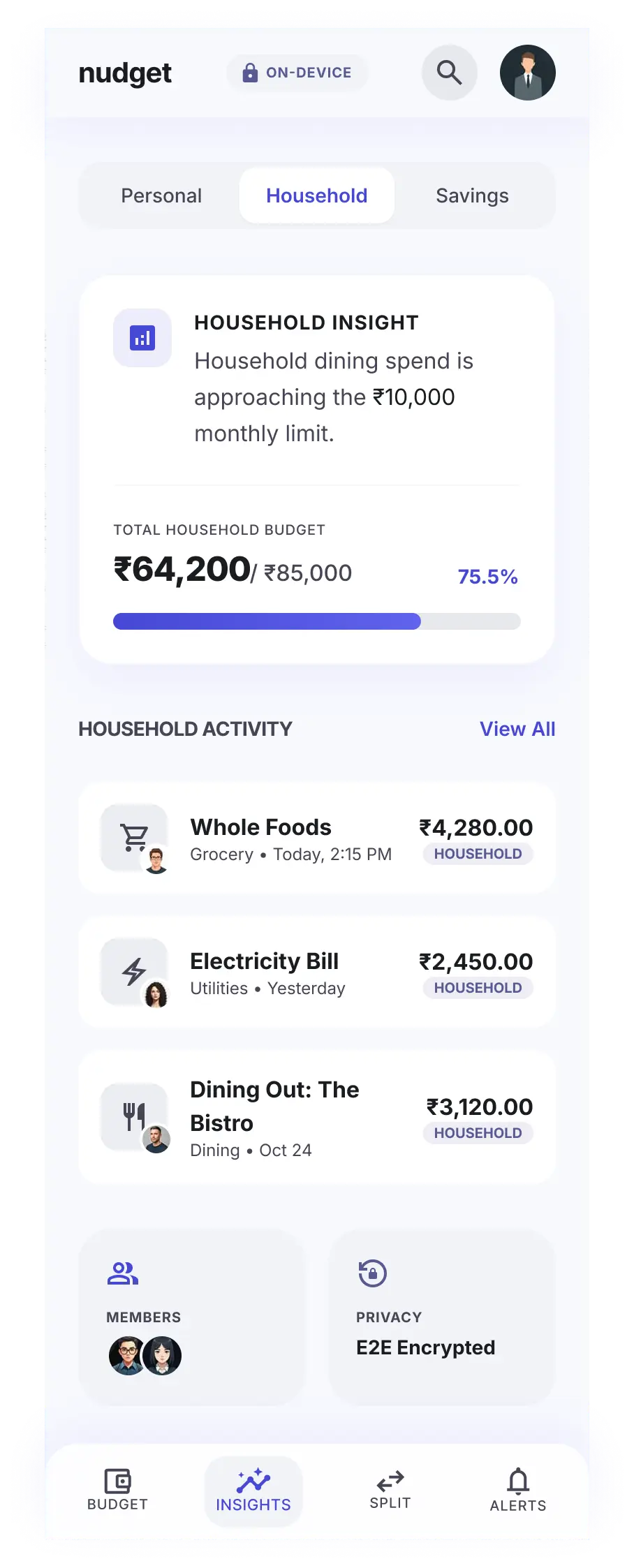
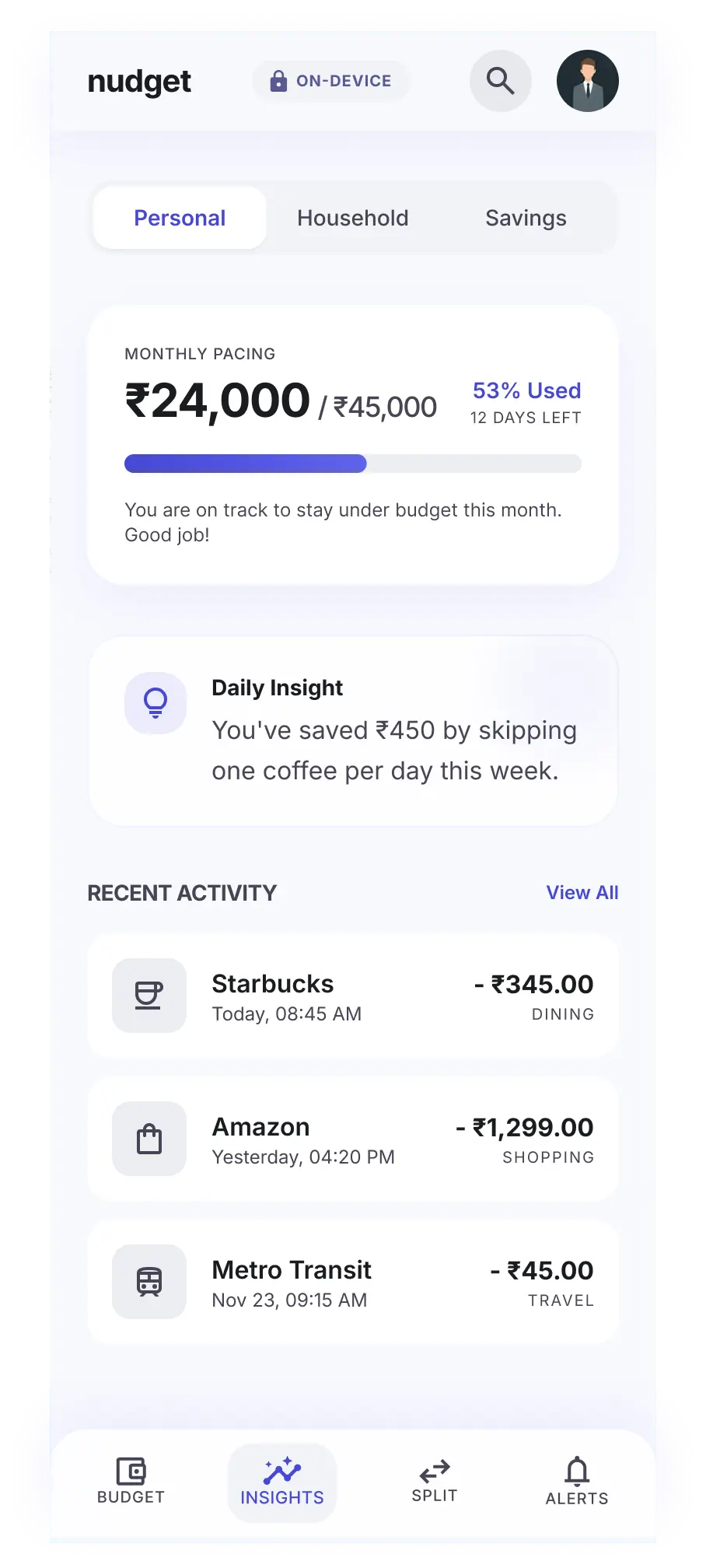
Mobile app interface
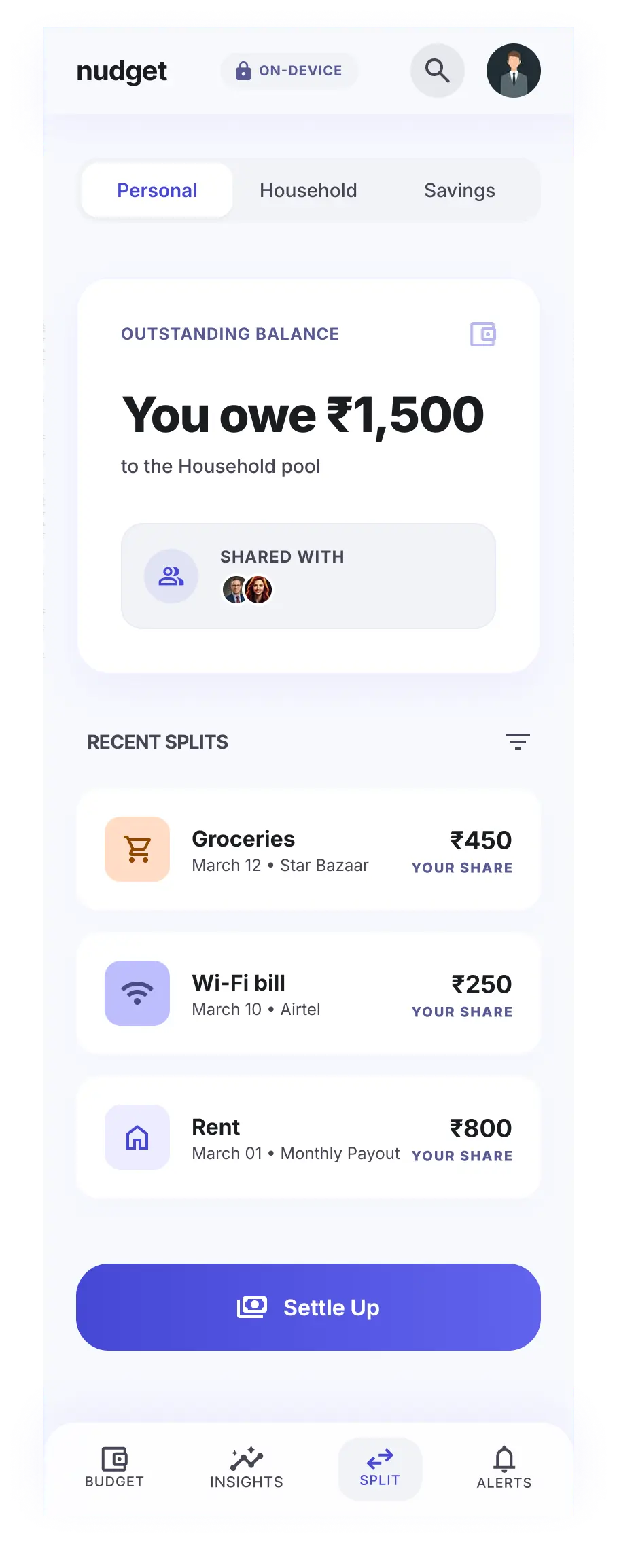
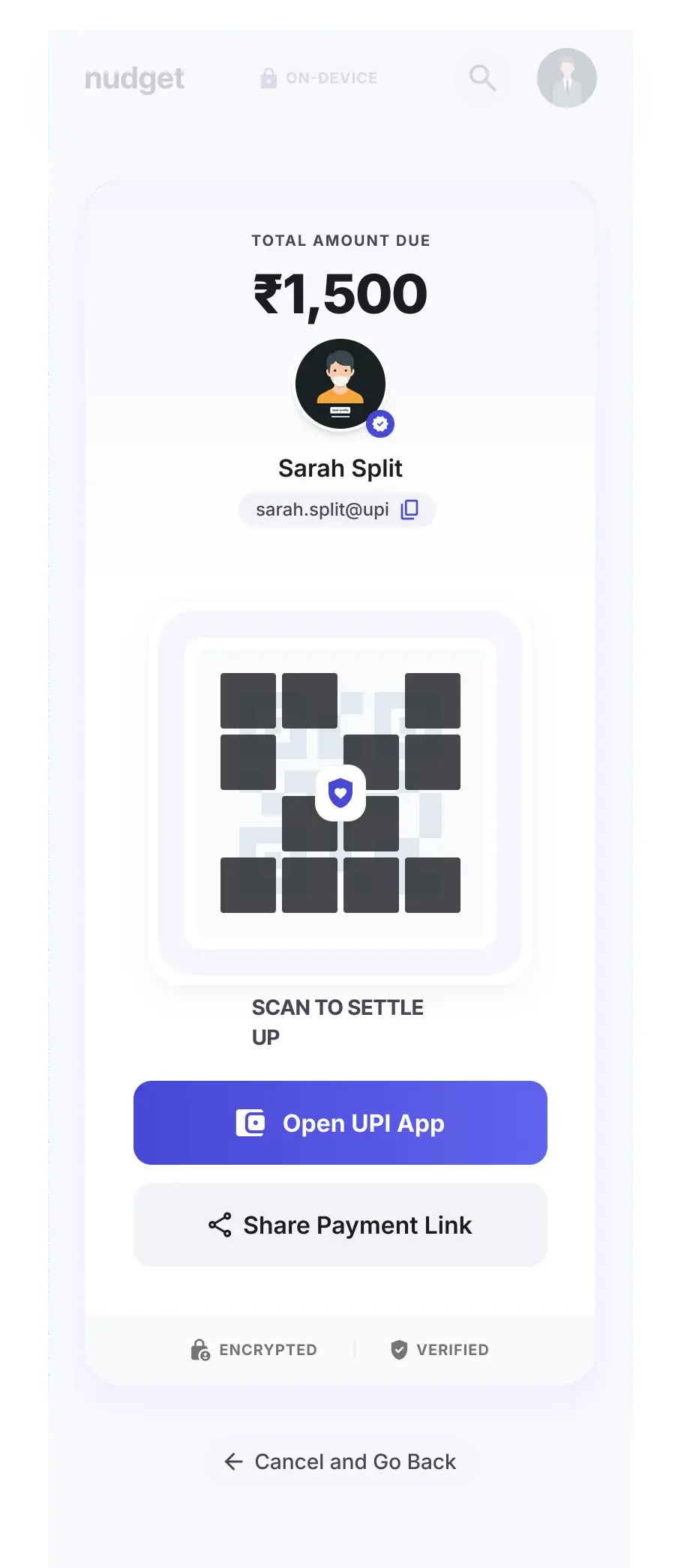
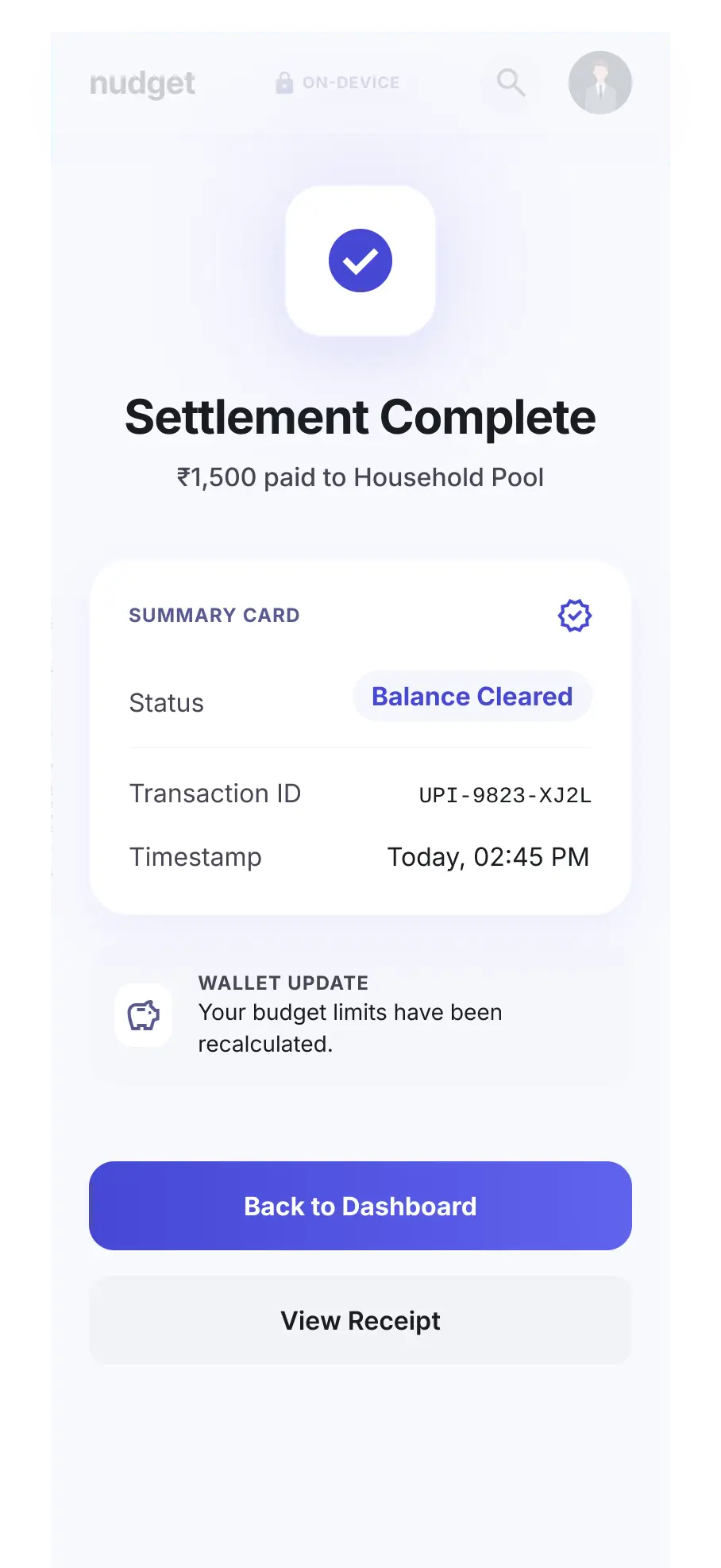
One: Meaning Over Metrics
One of the strongest research findings was that users already knew their financial goals.
What they lacked was clarity on whether they were moving toward them.
The dashboard was therefore designed around insights rather than raw transaction data.
Two: Progressive Disclosure
Different users needed different levels of detail.
The interface surfaced high-level financial signals first while allowing deeper exploration when desired.
This reduced cognitive load without limiting control.
Three: Focused Visual Hierarchy
The visual system prioritized readability and attention management.
A dark-first interface reduced visual fatigue during frequent use, while contrast and color were reserved for moments that required action, such as overspending alerts or goal progress updates.
This ensured that important information stood out without overwhelming users.To ensure Nudget didn’t slide into Dark Patterns, I authored a set of Ethical Design Guidelines to govern the MVP development.
8. Reflection: The Consultant’s Takeaway
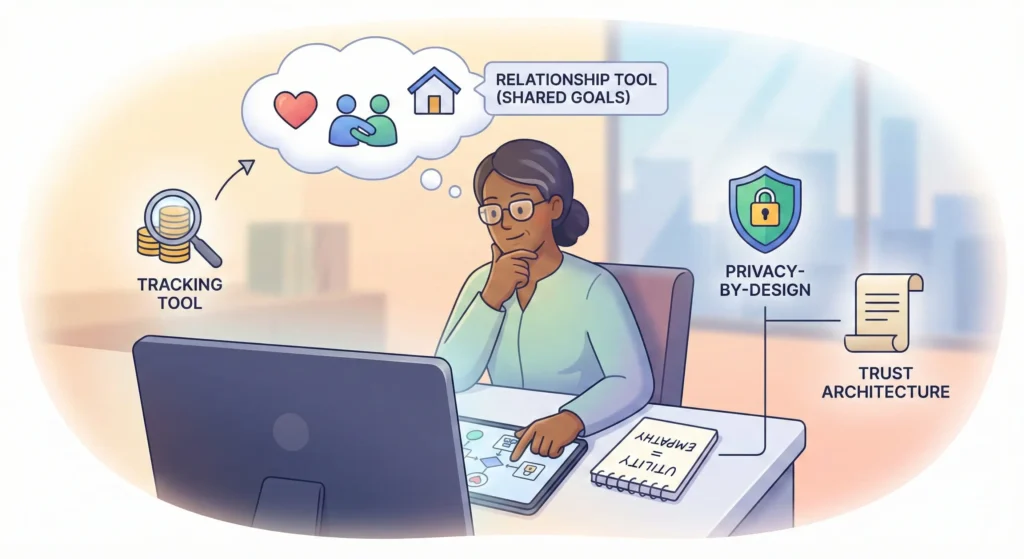
This project proves that Utility is a form of Empathy.
Nudget evolved from an expense-tracking concept into a trust-centered financial management system.
By focusing on privacy, automation, and actionable guidance, the product addressed not only how people track money but why they often stop tracking altogether..
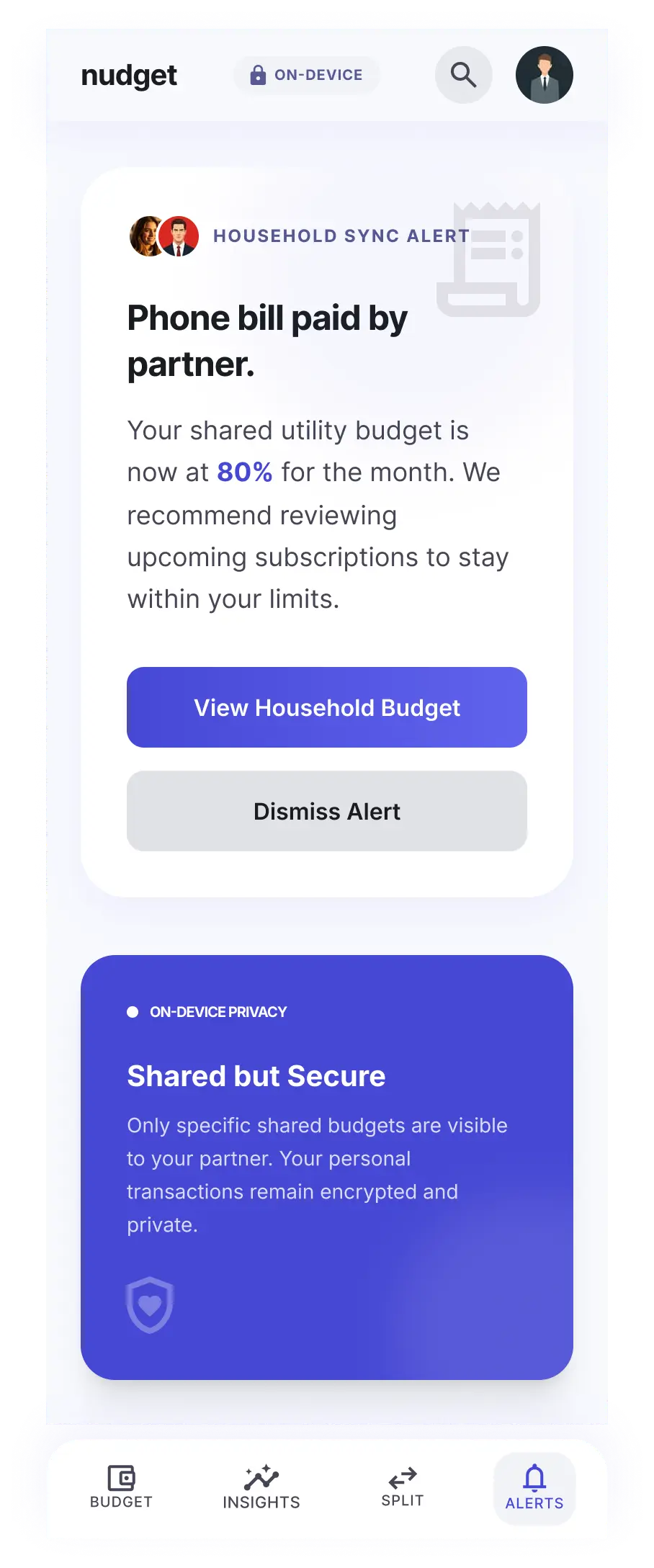
By understanding the psychological friction of shared finances, we moved the product from a tracking tool to a relationship tool. As a consultant, my value wasn’t just in the UI deliverables but in protecting the user’s autonomy while guiding the startup toward a defensible, ethically sound market position.
I worked with the Engineering and Legal teams to ensure our Privacy Shield wasn’t just a UI trick, but a Privacy-by-Design data architecture. This reduced liability and became a key marketing differentiator for the startup’s pitch deck.